
EXPERT INSIGHT
Process Engineering at Materialise: The Pivotal Step in First-Time-Right Production


Many manufacturers will tell you that the end product often gets the spotlight. In 3D printing, however, successful volume production depends on much more than the final result; it demands consistency in every layer of every print. That’s why process control is crucial, and why Materialise invests heavily in the art of process engineering.
While the production process is important in all forms of manufacturing, it is particularly impactful in our world. 3D printing is a process-intensive technology, meaning the properties of each part are defined during printing, not only by its raw materials. It’s easy enough to assess the quality of certain characteristics, such as color and surface quality, but the majority aren’t visible to the naked eye.
As a manufacturer, you can test one or two finished parts for properties like chemical or fatigue resistance, but it would be far too costly and time-consuming to do the same for every part that follows. Repeat production relies on trusting your supplier to deliver the same results every time.
“For series production, that confidence can only come from knowing the supplier is running the same process every time,” begins Toon Roels, Director of Process Engineering and Quality at Materialise. “This is where Materialise delivers value that many others cannot. We define and control essential process parameters, ensuring consistency across production runs.”
Process control at Materialise
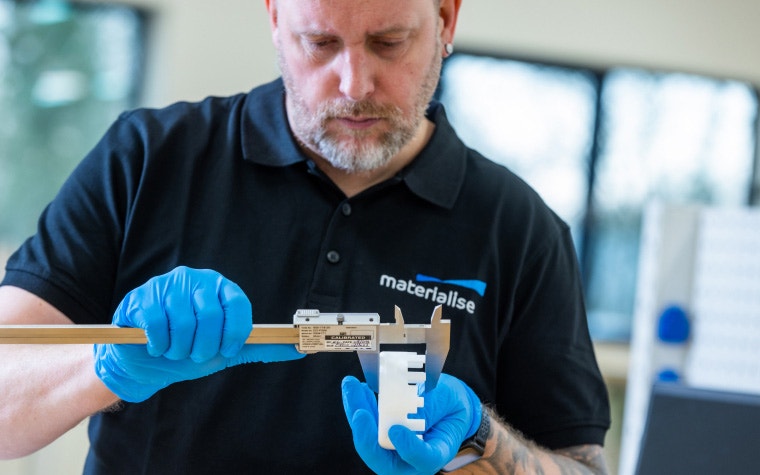
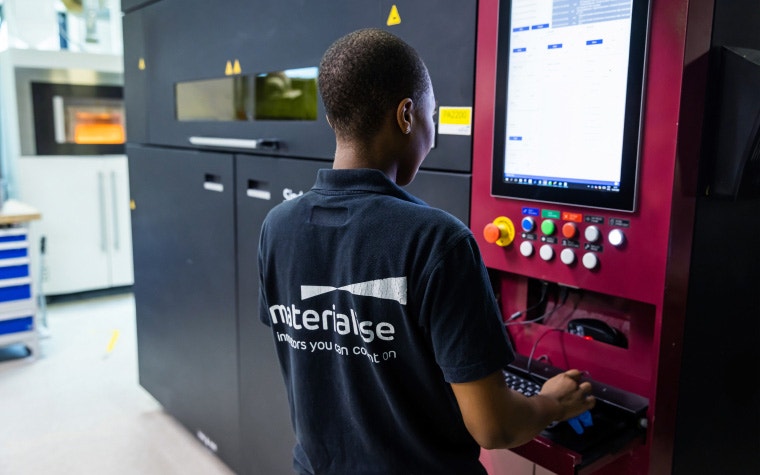
Our standard approach to process control ensures each of the essential parameters remains within narrow tolerances to eliminate variability. From raw materials to machine settings and environmental conditions, we carefully define and monitor every factor. Importantly, this standard is applied across every Materialise facility — whether it’s printed in Belgium or Poland, you can expect the same result.
This high level of control allows us to offer reliable series production to a wide range of strictly regulated industries. It’s especially critical in 3D printing, where success depends on controlling every layer for hours, again and again.
“3D printing is inherently more complex than a technology like injection molding,” explains Toon. “Nevertheless, we achieve a level of control that satisfies customers and application needs in even the strictest industries.”
It’s not something that happened overnight. Rather, it’s the result of three decades of experience, process know-how, and hard work from our dedicated process engineering department.
The art of process engineering
The department's role is essentially to make what we produce at Materialise fit for purpose, both in terms of end result and financials. More than thirty-five years of product know-how really make a difference here, especially when designing a process that meets the different needs of both prototyping and series production.
“We need to translate the customer’s wants into an efficient, affordable production process, and that’s where our process know-how kicks in,” he explains. “We have to know the relationship between certain raw material characteristics or process parameters and the possible outcome, and steer them in a direction that delivers the quality they need. And all in the most cost-efficient way, at the highest possible speed. That's process engineering.”
The importance of knowing your customer
Of course, it’s not just process knowledge that makes a difference. After all, the old saying, “The customer is always right,” applies here as well. Knowing what they want and need from their process, especially when working with multiple industries, can make or break a deal. Each will face their own levels of quality assurance, regulatory hurdles, scalability, speed to market, and reliability needs — collaboration is key.
“Customers often have quality expectations that aren’t easily verifiable for an AM provider,” explains Radhika Dhuru, Market Manager for Medtech at Materialise. “Imagine if they needed to know whether a part will exhibit outgassing, for example, which can be critical information for some biotech and medtech applications — you can’t tell without a chemical expert on hand, who can assess where the outgassing comes from and how the material and process might interact. It’s a collaborative process to translate their expectations into measurable outcomes.”
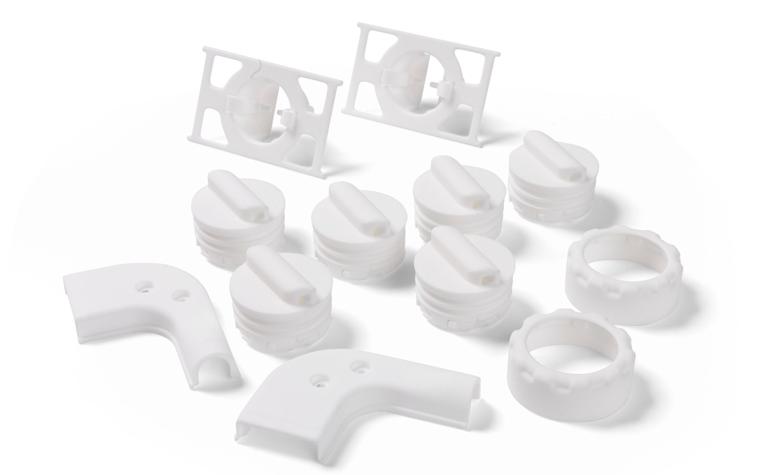
That approach is evident in the way we partner with customers to define and refine processes. Take Sartorius, a biopharmaceutical company that produces customized bioreactors. Sartorius audited Materialise’s process and has now produced over 30,000 biocompatible parts with us. They’re thrilled with the end product, but it was the two-way nature of the relationship that really stood out.
“When we have to industrialize products, the relationship has been very productive. Our quality team can go to Leuven and touch base with yours — we'll tell you what we need, and you'll show us what you can do to make sure we get it,” Jeremy Pullin, Head of Additive Manufacturing at Sartorius, told us. “It’s been very much a conversation, whereas other suppliers will only work their way or not at all. That’s what really makes Materialise stand out.”
A unique promise
The promise of repeatability is sometimes taken for granted, yet it’s part of what makes Materialise fairly unique among 3D printing providers.
“Many 3D printing bureaus will promise repeated parts, but not a repeatable process,” says Radhika. “Materialise opens the recipe and ensures it’s consistent every time.”
“What’s quite unique is that we offer a platform to discuss very individual needs with every customer,” agrees Toon. “We have the advantage of serving so many broad applications, such as aerospace and medtech. Not many companies have the agility or willingness to deal with the complexity of working with so many different markets, each with its own requirements. But at Materialise, we work hard to deliver what those markets need.”
Share on:


You might also like
Never miss a story like this. Get curated content delivered straight to your inbox.