
CASE STUDY
Lufthansa Technik's Unsourceable Latch: Enabling Repairs with a 3D-Printed Titanium Replacement
What do you do when a part keeps breaking, but spares are impossible to find? For Lufthansa Technik, the solution was simple: create your own. Here’s how their innovative additive manufacturing team solved two problems at once by designing a 3D-printed titanium replacement for a damage-prone polymer latch.
The challenge
- A damage-prone polymer component that could not be purchased individually from OEMs
Key solutions
- A redesigned part, produced in titanium Ti6Al4V through EN 9100-certified metal 3D printing
The results
- A new titanium latch with a much longer expected life cycle
- An effective repair solution, replacing a single part instead of an entire roller shutter
The challenge
Replacing a damage-prone polymer component
When the roller shutter assemblies aboard the A330, A340, and A380 repeatedly experienced damage during in-service operation, Lufthansa Technik decided it was time to make a change.
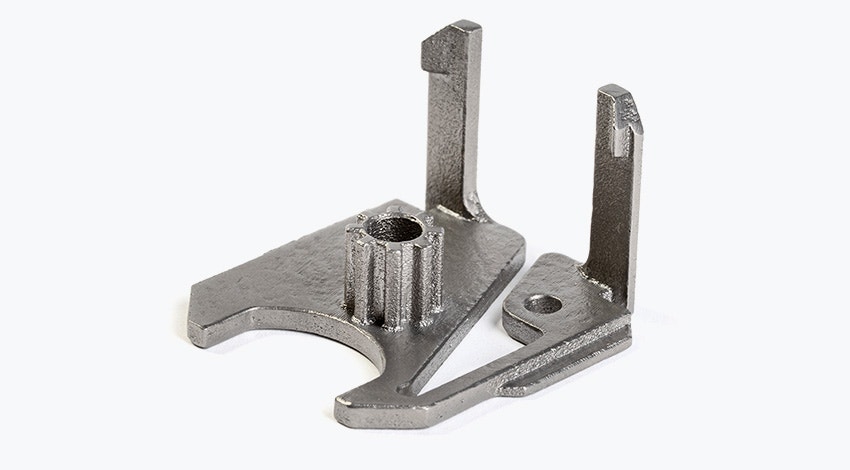
They soon identified the source of the issues. The polymer latch within the roller shutter assembly that retains the roller brake and endcap in place wasn’t strong enough to withstand the wear and damage over time.
However, there was a second problem: sourcing a replacement. OEMs would not sell the component in question individually. Without a supply of spare parts, making repairs was impossible, forcing them to replace the entire assembly each time at significant cost.
The team settled on an idea that would solve both issues at once, choosing to redesign the component for metal 3D printing.
The solution
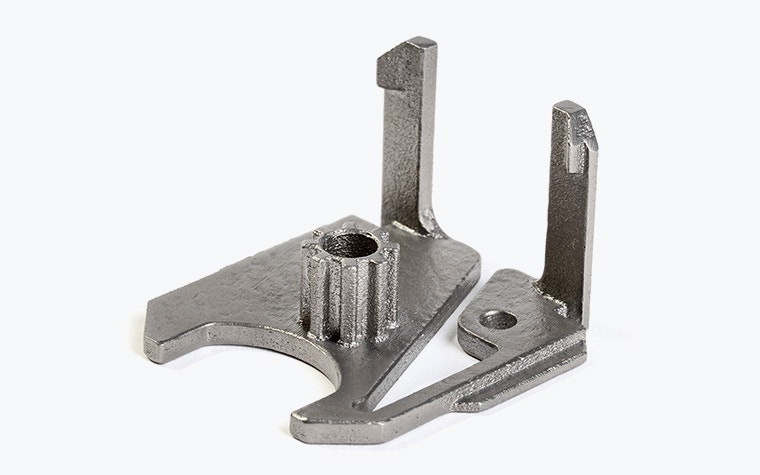
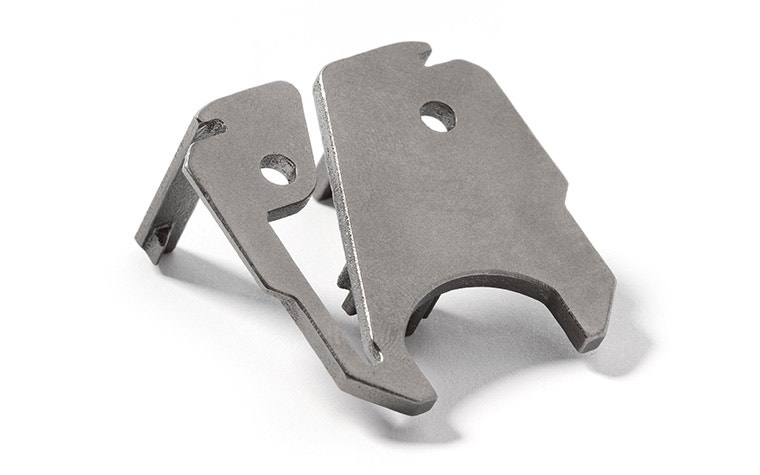
Design and manufacture a 3D-printed titanium latch
“The original part was an injection-molded polymer component with a complex geometry,” explained David Rudolz, Project Engineer at Lufthansa Technik. “It was immediately identified as an ideal candidate for metal additive manufacturing."
It’s a technology that the engineers at Lufthansa Technik are very familiar with. David is a member of the organization’s dedicated additive manufacturing team, and the company holds both EASA Part 21.G and 21.J certifications, allowing them to design, manufacture, and certify flight-ready parts.
This experience helped them create a design that matched the functionality and system of the original part, while adapting to the new material. The required elastic response of the metal, its geometry, and wall thickness were key factors in ensuring the component functioned as intended.
As in every project where the team develops a new part, they focused heavily on optimization — the idea was not to replicate it, but to improve it wherever possible.
The right production partner
After ensuring their choice of material — titanium Ti6Al4V — complied with the required regulations, Lufthansa Technik selected Materialise from its extended network to carry out the production of their sturdier, certified latch. The capacity and expertise of the team in our Metal Competence Center, alongside our EN 9100 certification for metal parts, made choosing Materialise a fairly straightforward decision.
“There’s been a strong partnership between Materialise and Lufthansa Technik for many years,” confirmed David. “Materialise is one of our preferred partners and was our first choice for this project.”
After passing the required audit, Materialise was soon qualified as a Lufthansa Technik supplier of metal 3D-printed parts. Engineers from Lufthansa Technik and Materialise began working closely together to coordinate the manufacturing process, process stability requirements, and production controls.
The result
A longer-lasting part that enables repairs
With all requirements in place, the team at Materialise began producing the parts in accordance with EN 9100 for metal and in line with Lufthansa Technik’s design specifications. They’re flight-ready, fully certified, and in the air.
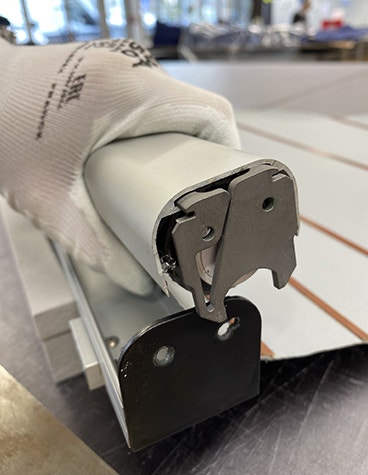
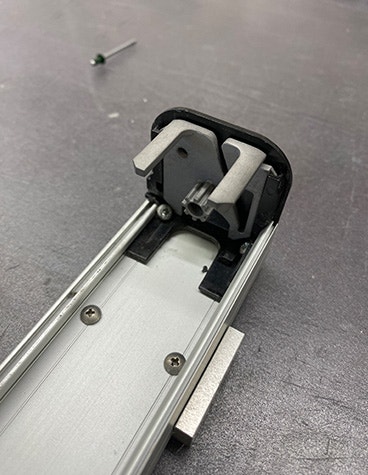
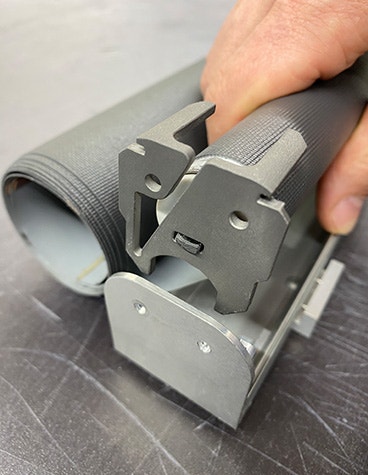
The new design — and particularly the material strength — of the titanium latch has understandably greatly improved this component’s expected lifetime. Its ability to withstand much more wear and tear is having a noticeable impact on Lufthansa Technik’s supply chain. They can keep the part in the air for far longer, and quickly source a replacement should the need arise. At the same time, the new latch design enables targeted repair rather than replacing the entire roller shutter unit, resulting in significant cost savings and more efficient maintenance.
The successful collaboration behind the project has also helped strengthen the bond between Lufthansa Technik and Materialise, with the 3D printing company now named an official workbench for metal parts.
Featured products and services
Navigate the future of aerospace with shorter lead times, more affordable small series production, and the unrivaled design freedom that additive manufacturing can offer.
Call on our industry-leading 3D printing facilities to deliver your prototyping and serial manufacturing part production efficiently — providing the right solution according to your needs and the required quality.
Share on:


