
EXPERT INSIGHT
Five Key Takeaways of the 3D Planning and Printing in Hospitals Forum 2026
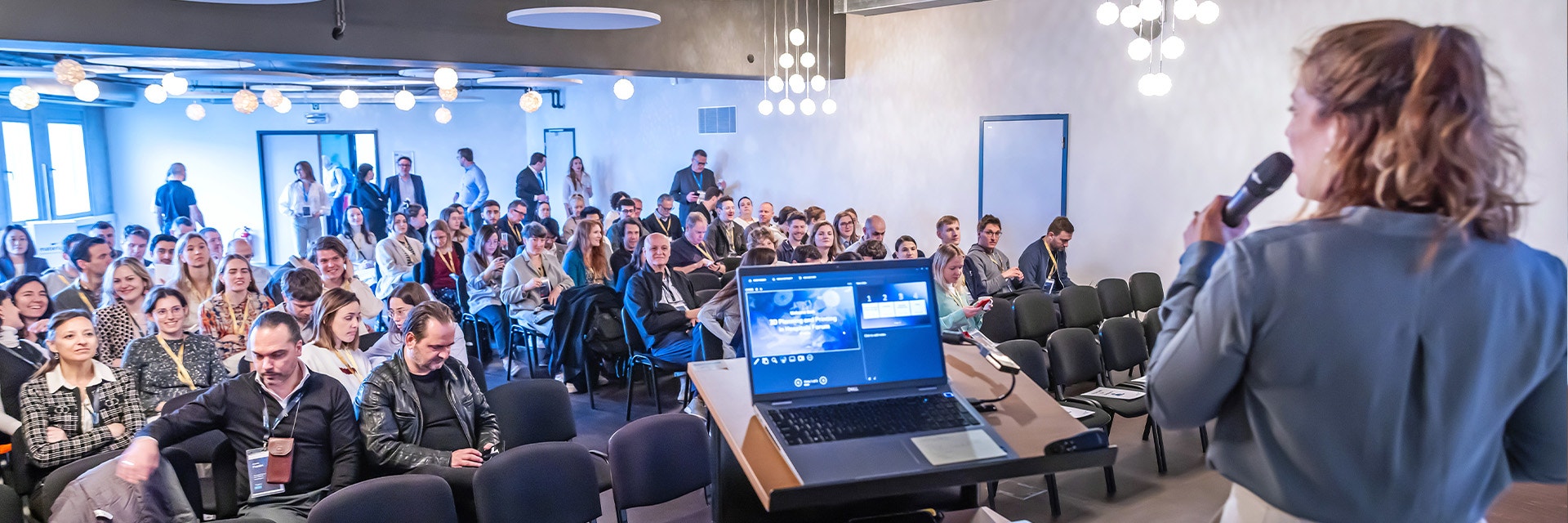
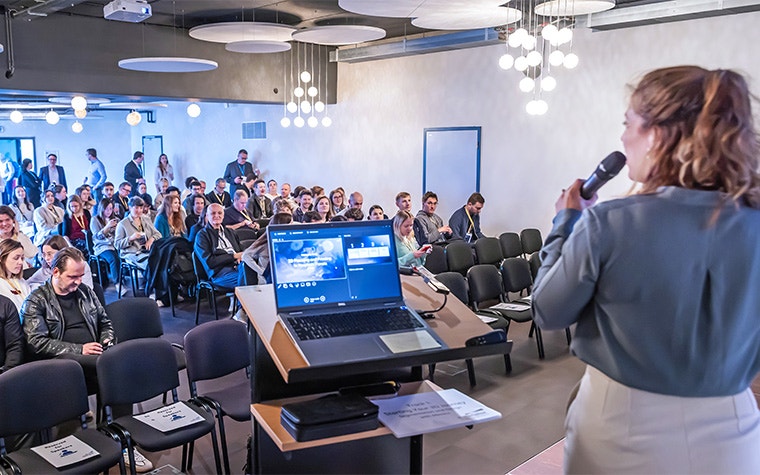
The 3D Planning and Printing in Hospitals Forum 2026 brought a clear and energizing message: we are no longer talking about a promising technology. We are talking about a standard of care, and the community shaping it has never been stronger, more creative, or more determined to make it work for more patients. Together, a vibrant community of surgeons, radiologists, clinical engineers, and biomedical professionals dedicated their time during two days of talks, workshops, and conversations that truly matter. Here are the five things that stood out most.
1. Soft tissue virtual planning is becoming a standard of its own
For years, 3D planning and printing have made their mark in hard tissue: cranio-maxillofacial surgery, orthopaedics, and bone reconstruction. These remain pillars of the field. But one of the most exciting stories coming out of this year's forum is how far and how fast soft tissue virtual planning has traveled into the mainstream.
Laura Cercenelli from eDIMES Lab at the University of Bologna delivered a talk that captured this shift with remarkable clarity: hepatobiliary procedures, partial nephrectomy, complex oncological cases where virtual planning is now not just possible but an expected part of good surgical preparation. And hers was far from the only voice making this case. Across both days, surgeons from multiple institutions showed how they are applying 3D planning to anatomy that, not long ago, would have been considered well outside its scope. The message was consistent and compelling: soft tissue virtual planning is no longer a frontier application. It is becoming part of how excellent surgical care is defined.
2. A community that keeps growing
Year after year, the forum grows. And every year, it surprises us.
The numbers tell part of the story: the community has expanded enormously since the early days when a small group of pioneering clinicians and engineers first gathered. But the numbers are not what make this event special. New institutions are bringing fresh questions and bold ideas. Familiar faces who have been part of this journey from the beginning are now mentoring the next wave. The conversations that start during coffee breaks continue long after the sessions end.
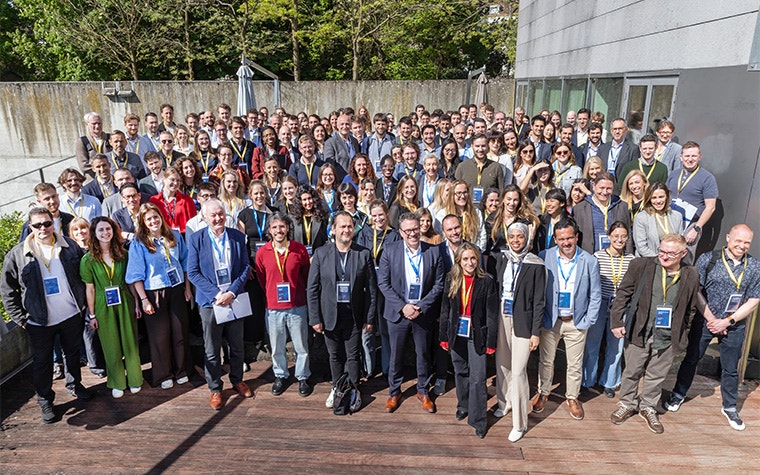
The International Society for 3D Technologies in Hospitals, represented by Giovanni Biglino, held a dedicated workshop on day two to bring members together to align on priorities and advance the field collectively. It was great to share our platform with this initiative, and to remain committed to the forum as an independent space, open to everyone advancing point‑of‑care 3D technologies, wherever they come from.
The community is the heart of this event, and continues to inspire.
3. Reimbursement is advancing, one country at a time
In earlier editions of the forum, the conversation was about proving value: does 3D planning improve outcomes? Is it worth the investment? Those questions have been answered. What is taking their place, in the formal sessions and just as much in the hallway conversations between them, is the more difficult and urgent question of how to get health systems to pay for it.
This year, we dedicated a full session to exactly that: The Reimbursement Gap: What's Blocking Us and How to Break Through? with Naomi Nathan (MGA Medical) and Freek Bielevelt (Radboudumc). The picture that emerged is one of real but uneven progress. Several countries are making meaningful advances, each navigating its own regulatory and funding landscape. Spain has made concrete strides, with reimbursement codes now in place, and the Netherlands is another market where momentum is building. Others are not far behind.
What every conversation made clear is that no single actor can solve this alone. Progress on reimbursement requires the whole ecosystem working together, and the community gathered in Leuven this year is more than ready to take on that challenge.
4. AI and automation are reshaping what efficiency looks like
Artificial intelligence has arrived in the world of 3D planning and printing, and it is already changing how people work.
Efficiency has always been a central challenge in this field: how do you scale a 3D lab when case volumes keep growing but resources stay flat? This year, the answers coming from the community were sharper and more practical than ever. A dedicated parallel session on workflow automation, scripting, and AI gave the floor to innovators like Peter Pijpker of UMC Groningen, who shared how scripting is eliminating repetitive tasks, and Natalie Short and Tayla Sewell of St. George's University Hospitals, who demonstrated AI applied to patient-specific orbital floor planning.
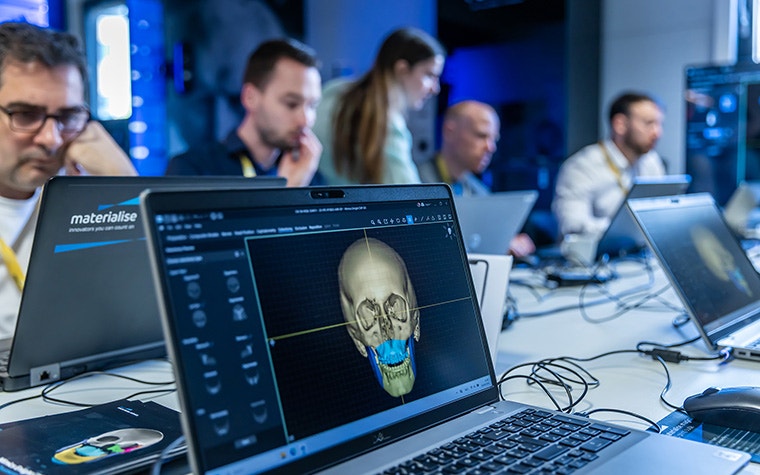
What makes this moment particularly exciting is that the innovation is happening on both sides. Tools like Materialise Mimics continue to add AI‑enabled segmentation, automated workflows, and case management tools. And at the same time, users are building on those platforms, writing their own scripts, designing their own automations, and solving their own problems. That combination of platform capability and community ingenuity is a powerful signal: this field is scaling, and it is doing so intelligently.
5. Innovation is alive, and it goes hand in hand with becoming the standard of care
There is a temptation to assume that once a technology becomes standard of care, the era of discovery is over. The 3D Planning and Printing in Hospitals Forum exists to prove otherwise.
This year's Mimics Innovation Award winner, Fleur de Geer from Verwelius 3D Lab, presented work on MRI-based virtual surgical planning that enables radiation‑free 3D pathways for personalized head and neck reconstruction, leaving the room buzzing. Nieves Cubo Mateo from Gregorio Marañón Hospital shared the story of how 3D planning saved a child's leg, a case that was as technically impressive as it was deeply human. The message from both was the same: the clinical impact of this technology is nowhere near its ceiling.
We also added three clinician-led workshops on day two, covering congenital heart disease, cranio‑maxillofacial surgery, and orthopaedics. These were about going deeper into what is already happening: clinicians and engineers walking through how they run their services day to day, what their collaboration actually looks like in practice, and how 3D planning and printing have become embedded in the standard of care at their institutions. For many attendees, hearing that level of operational and clinical detail from peers was one of the highlights of the entire event. We look forward to growing this format.
The 3D Planning and Printing in Hospitals Forum exists to give this community the space it deserves to connect, share, and push the field forward together. This year reminded us why that matters. We cannot wait to see what 2027 brings.
L-105298-01
Share on:


You might also like
Never miss a story like this. Get curated content delivered straight to your inbox.