
EXPERT INSIGHT
"MIOS is not a technique. It’s a mindset”: Clinical Guidance from Experienced Surgeons
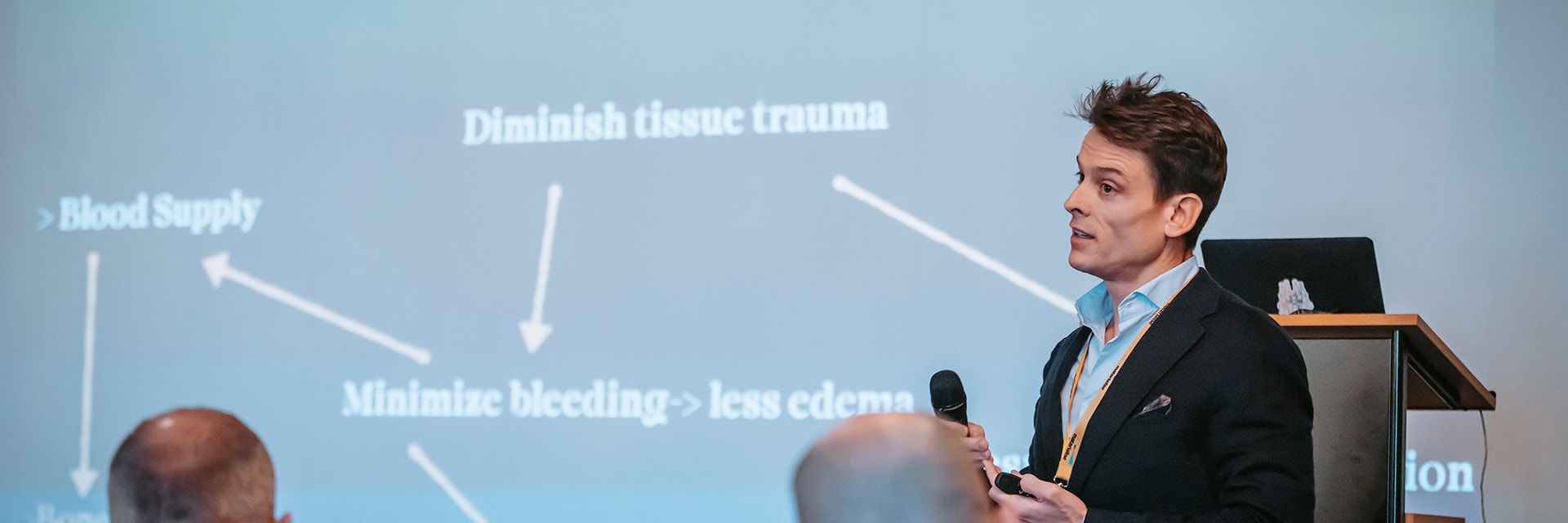
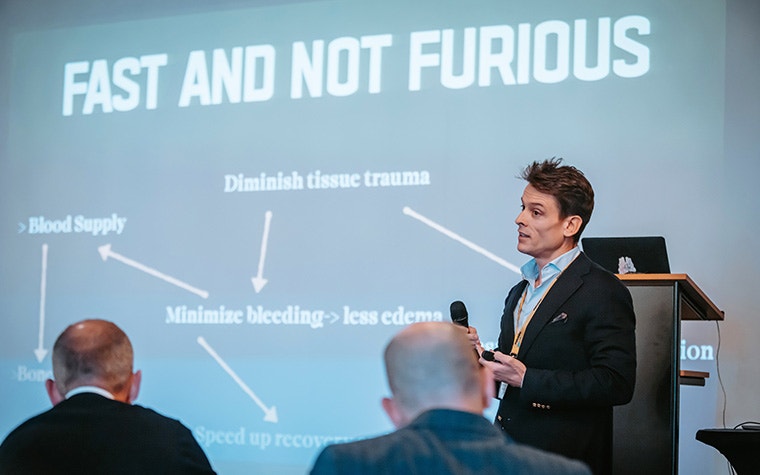
Minimally invasive orthognathic surgery promises a smaller surgical footprint, but it also raises a critical question: how do you maintain control when visibility and access are reduced? For surgeons adopting MIOS workflows, finding the answer is key to making results more predictable.
In a recent webinar, Mastering MIOS: Clinical Insights, Tips and Tricks, and Real Cases, Dr. Javier Gutierrez and Dr. Valerio Ramieri shared how they address this challenge in everyday clinical practice. Rather than focusing on exceptional outcomes, they discussed the decisions, workflows, and collaborative approaches that help reduce uncertainty and support predictable results. This article breaks down their guidance into the key drivers that make predictability achievable in MIOS.
1. Adopting the MIOS mindset
Dr. Gutierrez opened his presentation by reframing MIOS as a change in approach rather than a set of technical steps. Smaller incisions, refined guides, and new fixation options support this shift, but they are secondary to how surgeons plan, execute, and manage risk.
For him, predictability comes from consistency and intention. MIOS means limiting soft‑tissue dissection, reducing the surgical footprint, and choosing approaches the surgeon fully trusts. If that trust is missing, predictability is compromised. As he later emphasized, patient safety always comes first.
Similarly, Dr. Ramieri feels his own technique and mindset have evolved since adopting MIOS. Any concept of predictability needs to include surgical accuracy, recovery, and the post-operative experience.
“We’re not doing it for ourselves. The MIOS technique is for the patient, I really believe this.”
2. Predictability starts with facial‑driven, patient‑specific planning
For both surgeons, predictability begins with the patient, not the software.
“Everything starts during the first consultation, before any software or measurements,” Dr. Gutierrez explained. “I like to calibrate all the expectations from the patient, analyze the facial dynamics, and start building my facial‑driven plan, which is my way of planning any single case.”
At this stage, the focus is not on defining movements or measurements. Rather, it’s about understanding the patient’s wants or objectives, and the surgeon’s perspective on how to achieve them. Any plan should also be driven by facial harmony and alignment with patient expectations.
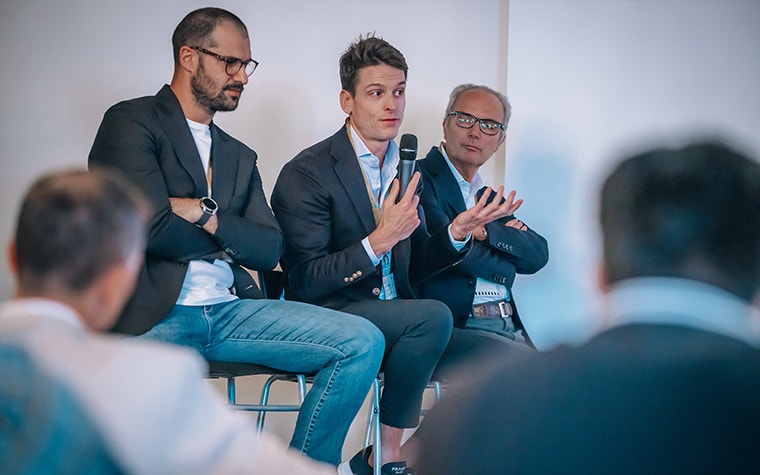
As Dr. Gutierrez summarized, “Beauty follows function; if there’s harmony, there is function behind it.”
3. Diagnosis must reflect a 3D, dynamic reality
“We don’t live in a 2D world.”
Accurate diagnosis, Dr. Gutierrez explained, requires more than static analysis. Calibrated photography remains essential, but only when properly standardized. He aligns images to the true vertical line and carefully adjusts head position before evaluation.
“A picture is just a picture, but here we can see everything that we need to see. How is the midline? How is the buccal corridor, the width of the maxilla? How is he smiling?”
Profile views further support predictions of soft‑tissue behavior and post‑surgical balance. Static images, however, cannot capture real function, hence Dr. Gutierrez’s preference for video. Capturing natural, non‑forced expression ensures planning reflects how patients present in everyday life.
“You don’t live in a 2D world. You are 3D. You are animated. You have life. My goal is to get this spontaneous smile while recording, because it shows us the real aesthetics and the real function.”
4. Software enables alignment across the clinical team
Once clinical intent is clear, the challenge becomes about translation: how reliably can that intent be carried through planning, collaboration, and execution? In MIOS, this is where predictability is either reinforced or lost.
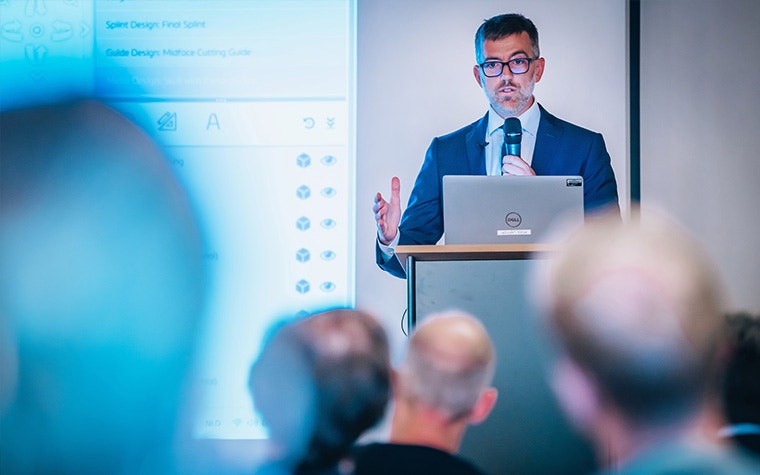
Software plays a role, but not in the way it is often framed. It is not primarily about visualization and efficiency. Its real value lies in creating a shared understanding between everyone involved in the case: surgeon, orthodontist, engineer, and patient.
That's why Dr. Gutierrez encourages clinicians to actively engage with imaging data rather than delegate interpretation. Early, direct interaction with data improves understanding and reduces misalignment later in the workflow.
“I always encourage clinicians to study the CT. There are many DICOM visualizers where you can get very nice images that are also useful for presentations, where you can see and play with soft tissue, and where you can see the slicing with the MPR while you do the 3D.”
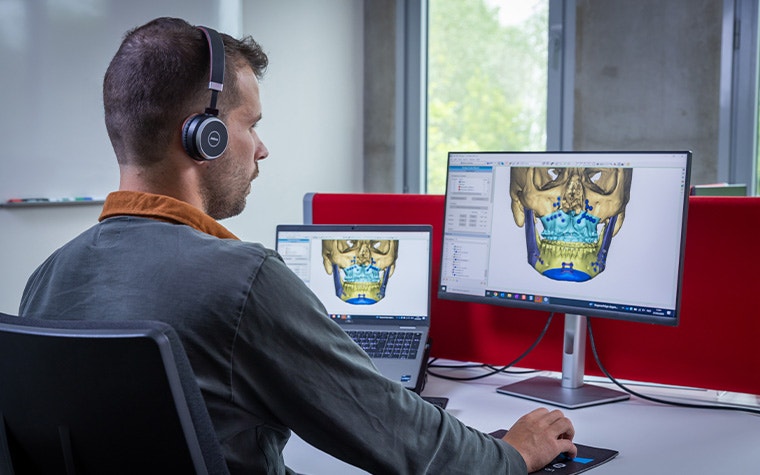
He also highlighted how STL visualization improves collaboration with orthodontists.
“You also have these STL visualizers that allow you to manipulate your STL files, and, at the same time, allow you to speak the same language as your orthodontist.”
Working from the same digital reference improves consistency and planning reliability before surgery begins. For Dr. Ramieri, alignment is where planning platforms such as Mimics Enlight CMF become critical.
“When it’s time for planning, I really value the new version of the Materialise planning software, Mimics Enlight CMF, because it’s intuitive and it’s very efficient. You can make basic planning straightforward by enabling clear communication between the patient and orthodontist at the same time.”
The software’s strength lies in workflow integration and communication, but more important is what it enables: a shared understanding across the entire clinical team before entering the operating room. Clear communication helps prevent planning discrepancies, and when small deviations occur, a connected workflow makes them manageable.
5. Precision execution supports minimally invasive access
Execution is where planning is tested. Historically, larger guides and plates limited the feasibility of MIOS. Advances in patient‑specific design now allow surgeons to maintain accuracy while reducing surgical access, something Dr. Gutierrez has experienced personally. In one of his cases, tooth‑borne support maintained accuracy while enabling a minimally invasive approach.
“Together with the [Materialise] engineer, we designed a minimally invasive guide system using two independent guides, one for each side. This type of design is the only way that we have to perform that minimally invasive approach.”
He also emphasized that predictability depends on the surgeon’s confidence rather than on any single design philosophy.
“In literature, you will find any design you can imagine for the guide. Nowadays, technology allows you to customize as you wish, and both types of design will deliver the accuracy you need.”
The same applies to fixation strategies, where stability and trust remain paramount.
“A common, recurring question is whether to use one or two plates. The literature supports both philosophies. It’s not about using MIOS if you don’t trust MIOS — feel your gut. The most important thing here is the patient, and the patient’s safety is what matters. The patient comes first.”
A connected workflow supports predictability
As these two surgeons showed throughout their presentations, MIOS is more about control than reducing complexity, and predictability is not the result of a single tool, technique, or decision. It is the outcome of consistency in the way teams approach cases, build plans, and collaborate. When these elements come together within a connected workflow, variability is reduced, and predictability becomes achievable in everyday clinical practice.
L-105312-01
Share on:


You might also like
Never miss a story like this. Get curated content delivered straight to your inbox.