


INTERVIEW
Mimics Innovation Awards 2025 Winners: Fleur de Geer and Dr. Pim Schreuder
MRI‑Based Virtual Surgical Planning Enables Radiation‑Free 3D Pathways for Personalized Head and Neck Reconstruction
What was the dream?
The long-standing goal of this research is to take virtual surgical planning in head and neck cancer to the next level. While digital workflows have already transformed osseous reconstruction, soft tissue planning still lags and remains largely analog. This research line aims to change that by bringing soft tissue fully into the digital era through a personalized, 3D planning workflow that integrates tumor resection, donor-site anatomy, and reconstructive planning.
Our vision is a future in which surgeons can plan every critical aspect of reconstruction before entering the operating room — from selecting the optimal donor site and perforator vessels to defining the shape, size, and thickness of the tissue flap. Ultimately, this approach enables truly personalized flap design tailored to the predicted tumor defect, with the potential to improve surgical efficiency, reduce donor site morbidity, and enhance both functional and aesthetic outcomes for patients.
This study marks an important first step toward that future: a radiation-free, magnetic resonance angiography-based (MRA-based) 3D workflow that visualizes patient-specific vascular anatomy and translates it into the operating room through customized 3D-printed guides. Together, these innovations pave the way for more predictable and personalized head and neck reconstructive surgery.
What was the challenge?
Soft tissue lacks rigid geometry and consistent landmarks, and perforator anatomy varies widely — making reliable preoperative planning inherently challenging. The standard handheld Doppler functions as a black box: it suggests a location but says nothing about vessel size, pedicle length, or whether the course is inter‑ or intramuscular, nor can it be integrated with defect modeling at the tumor site.
Our challenge was twofold:
- Technical: to develop an imaging and 3D‑modeling pipeline capable of visualizing detailed vascular anatomy together with surrounding soft tissues, enabling virtual surgical planning.
- Translational: to bridge the virtual plan to the operative field with a method that allows intuitive, accurate, and reproducible transfer of 3D information onto the patient.
To address these challenges, our team of experts developed a specialized MRA protocol, established a robust segmentation and 3D‑modeling workflow in Materialise Mimics, and designed patient‑specific 3D-printed perforator guides using Materialise 3‑matic.
What are the results?
We generated detailed 3D donor‑site models for oncologic head and neck patients undergoing fibula free flap, anterolateral thigh (ALT) flap, and medial sural artery perforator (MSAP) flap reconstruction. In the first ten patients, all perforators used for ALT and fibula flaps were clearly visible on MRA and accurately represented in the corresponding 3D models. For MSAP flaps, not all small‑caliber perforators were visible, yet surgeons still rated the workflow highly, with a usability score of 4.2/5, reporting increased confidence and improved anatomical understanding.
A larger prospective validation study evaluating the reliability, accuracy, and clinical impact of this 3D workflow has just been completed with promising results to be published soon.
Why did this research win?
This paper strengthens the practice of flap surgery with clearer evidence. It explores MRI-based virtual surgical planning to enable radiation-free 3D pathways for personalized head and neck reconstruction — an approach that is both timely and closely aligned with our core focus in 3D planning.
The article is clearly described and presents an honest, realistic view of what the method can deliver, without overstating the conclusions. It has practical implications and appears feasible to implement in a 3D lab setting. We also believe there is strong potential for optimization, particularly in the bony part of the surgery and in bringing more scientific rigor to that step of the workflow.
While the real impact still needs to be quantified, it is a novel application we want to highlight and support to help stimulate further innovation.
L-105175-01
Share on:


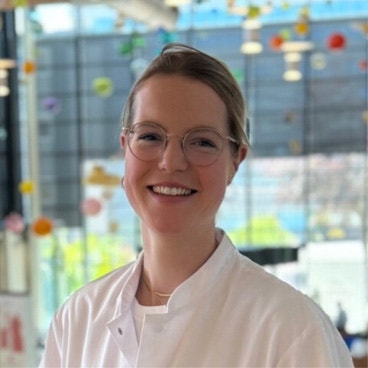
Biography
Fleur de Geer

Biography
Pim Schreuder
You might also like
Never miss a story like this. Get curated content delivered straight to your inbox.