
EXPERT INSIGHT
How Predictability in CMF Has Evolved Over 35+ Years
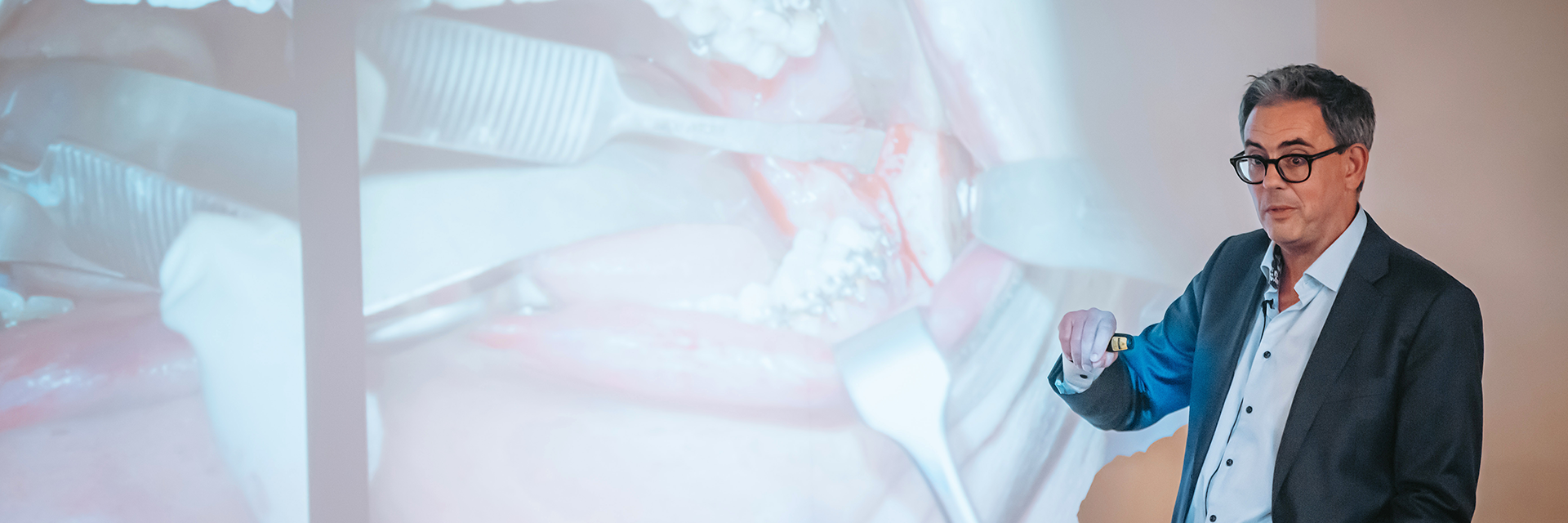
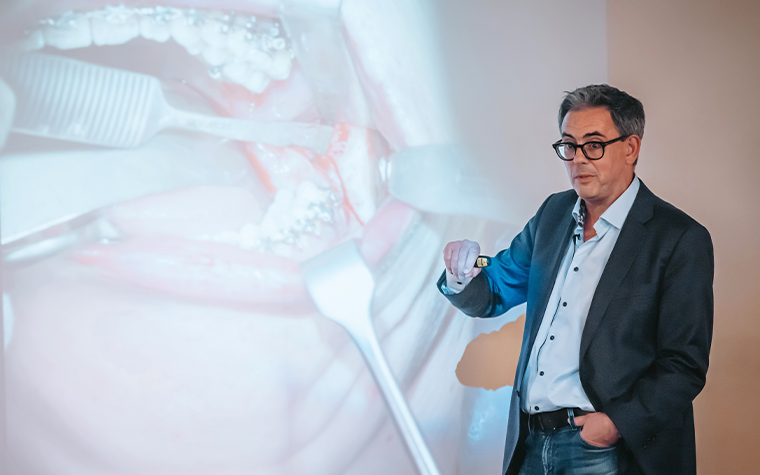
CMF surgery has always demanded precision, but what drives precision has changed. Today, many of the most important decisions are made before the first incision, through surgical planning, digital collaboration, and transfer to the operating room. That same shift is now shaping the next phase of CMF innovation.
Prof. Max Heiland from Charité Berlin says, “The challenge of treating our patients is not on the OR table anymore. It’s in front of the computer when we create the plan.”
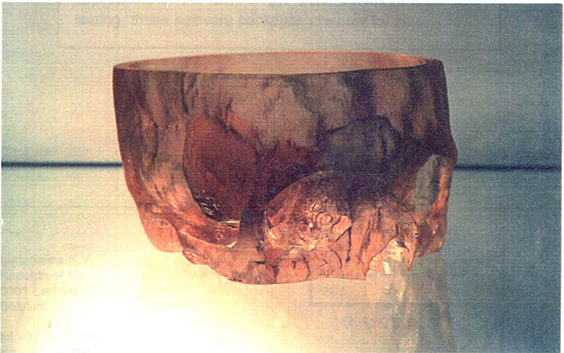
In CMF, the Materialise story is less about a single breakthrough and more about steady progress shaped by surgeon feedback. Our work in medical 3D printing and planning software goes back to the early 1990s, including early anatomical models (1992) and digital implant planning in dentistry with Simplant (1996) as an early foundation. This later informed CMF planning workflows in PROPLAN CMF/SurgiCase. These have continued into today’s planning environment as Mimics Enlight CMF. Over 35+ years, the work behind CMF solutions at Materialise has grown from Standard+ Solutions to digital planning, personalized implants and guides, and an increasingly connected ecosystem that holds clinical engineering and planning at the core.
CMF cases rarely fit a one-size-fits-all approach. Anatomy varies; functional requirements are high, and small inaccuracies can lead to meaningful downstream effects. That is why progress in CMF has consistently focused on predictability: clarifying decisions during planning, improving transfer to the OR, and supporting consistent execution in everyday workflows and across team coordination.
The foundations: OBL and Standard+ Solutions
More than three decades ago, our CMF journey began with OBL (now Materialise France), known for advancing Standard+ Solutions designed around surgical reality.
A foundational innovation was the S-plate, developed to improve handling and precision through a design that supports controlled correction. This foundation did not disappear as personalization evolved. In practice, Standard+ and Personalized approaches are complementary, offering different levels of customization depending on anatomy, indication, and the surgeon's approach or the institution's care pathway.
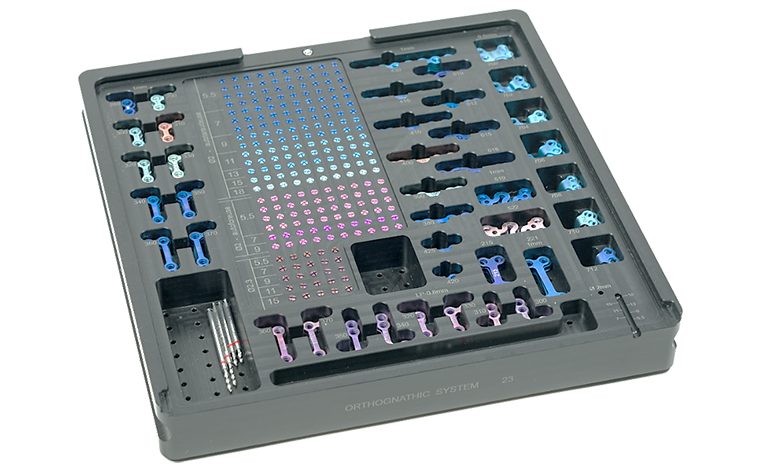
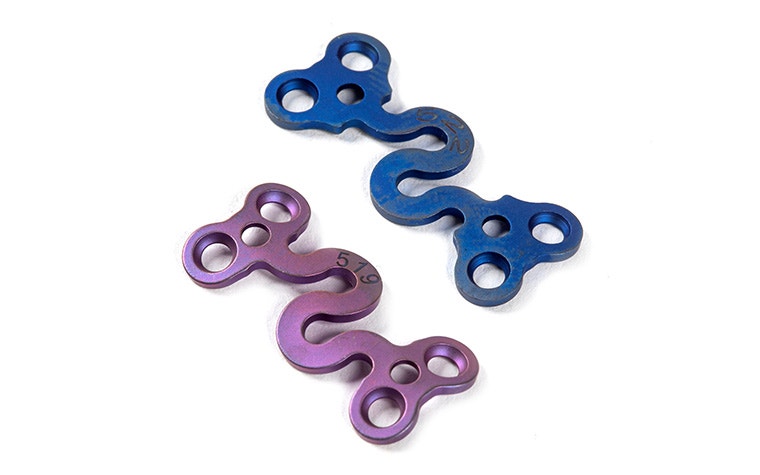
Standard osteosynthesis module by OBL in 1996 (left) and a 3D-printed titanium S-plate (right).
The shift to personalization: early planning and guides
While the first patient-specific implant was delivered in November 2009, the move toward personalization started earlier with planning and transfer tools.
Maarten Zandbergen, Materialise Market Manager, recalls, “Around 2004, we were already planning the first personalized cases in 3D and in 2005, 3D printing surgical guides to transfer the plan to the OR.” Those early CMF workflows benefited from adjacent experience in digital dentistry, where planning and guided execution were already established and laid out the foundation for today’s more connected planning approach.
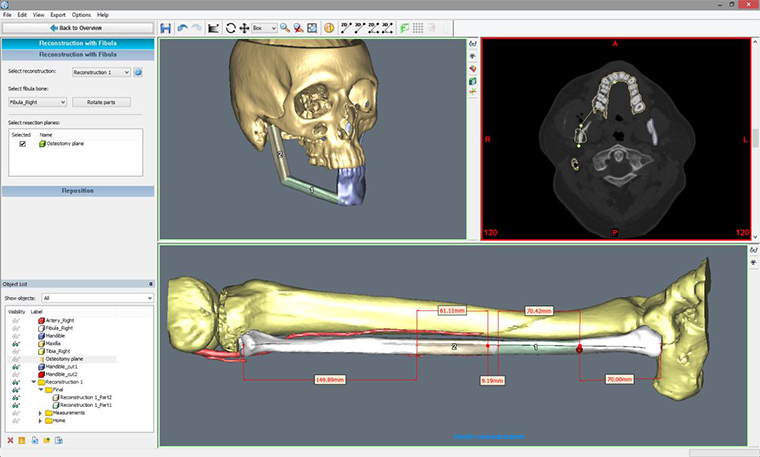
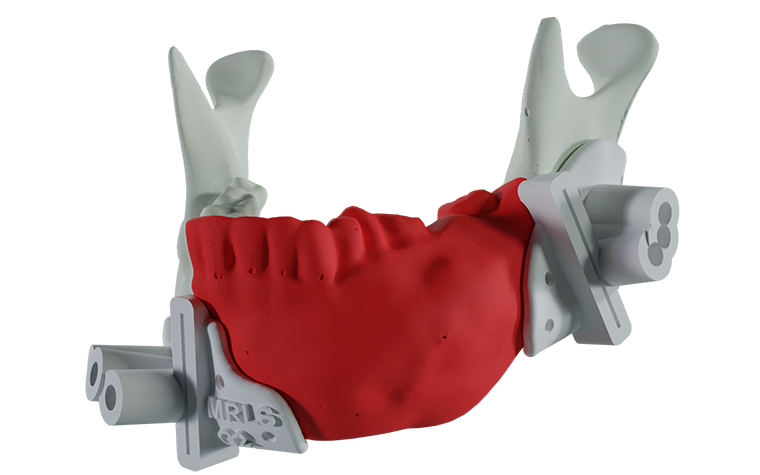
PROPLAN CMF software for virtual surgical planning in 2005 (left), 3D-printed surgical guides (right).
The value of planning and guides shows directly in the surgical approach. Prof. Heiland explains, “If I don’t have guides… I need wide exposure. If I have a plan and guides, I don’t need the whole exposure.” With less exposure, surgeries can move towards being less invasive.
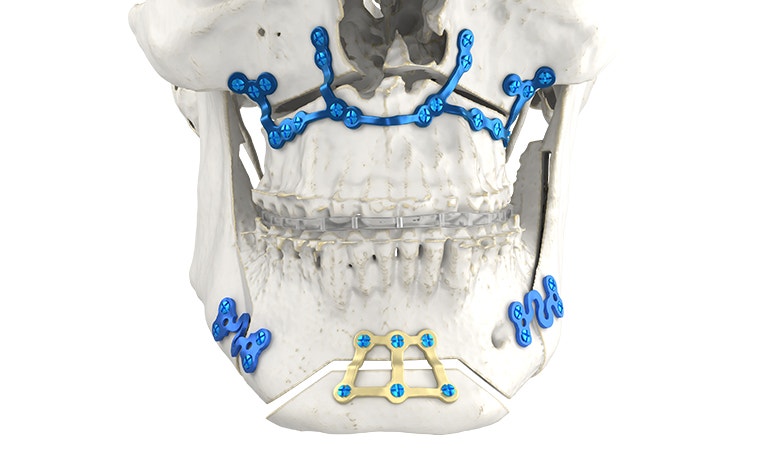
In 2010, the first personalized titanium plate for orthognathic surgery was introduced, building on earlier work in planning and guides. Guillaume Dubois, Materialise Market Manager and former General Manager of Materialise Paris, reflects, “Together with medical practitioners, we were amazed by the possibilities offered by full custom design and titanium 3D printing. We spent countless hours exploring how digital planning and 3D-printed custom plates could overcome the limitations of standard devices and traditional procedures.”
Scaling through surgeon collaboration
Scaling predictability required more than technology; it required technical maturity and clinical confidence. Dr. Thomas Kofod, of Rigshospitalet, Copenhagen, captures why predictability and plan transfer matter especially in TMJ surgery, “You can plan surgery much better… but you can also transfer it accurately. That’s a game-changer. If you have tried it once, you won’t go back to doing imprecise surgery.”
From the inside, Maarten describes what helped broaden adoption: “Moving from a handful of complex cases to broader indications was the real challenge. Early believers sharing results at national and international meetings helped accelerate adoption.” That peer-to-peer clinical validation helped move personalized solutions from exceptional cases to a wider range of indications.
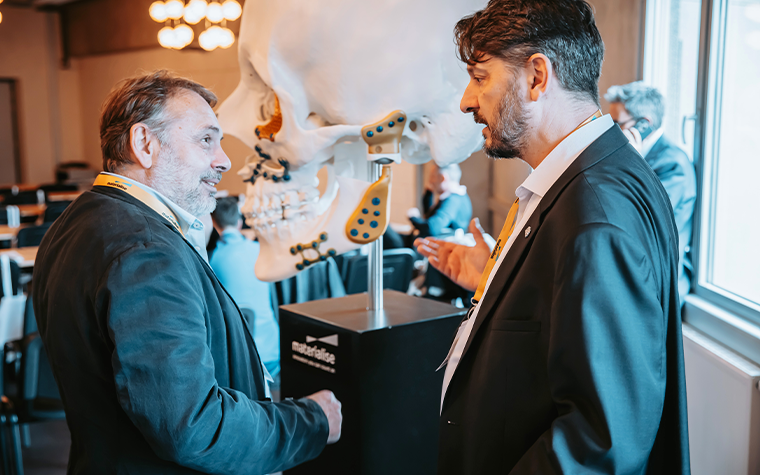

A discussion with Dr. Vladimír Machoň (Charles University), TMJ expert (left), and a panel discussion during Materialise CMF Summit Innovation in 2025 (right) with Dr. Alessandro Remigio Bolzoni (IRCCS Fondazione Policlinico), Dr. Javier Gutiérrez (MIOS Academy) and Dr. Diego Rossi (IRCCS Fondazione Policlinico).
Innovations that changed the practice: SynpliciTi, PorousiTi, TMJ
Innovation in CMF has moved in practical steps, from new implant structures to more reliable plan transfer. That included the first 3D-printed porous implant (2010), the first SynpliciTi case combining custom plates with predrilling guides (2012), and later milestones in TMJ care, such as the TMJ Total Arthroplasty System in Europe (2022). As CMF solutions matured, innovation expanded beyond custom geometry into workflow execution, implant integration, and complex reconstruction. Key milestones include:
PorousiTi: porous structures designed to support implant integration
SynpliciTi: combining patient-specific guides with a patient-specific implant to support predictable plan transfer
TMJ solutions: enabling personalization in complex functional reconstruction
Maarten highlights what enabled more consistent execution: “Combining patient-specific guides with a patient-specific implant made it possible to fully transfer a detailed plan to the OR and make the key decisions before stepping into surgery.”
Impact today
The CMF history is reflected in sustained clinical use across hospitals and indications:
- 2010 — today: 40,000+ patients treated with personalized implants and guides
- 2017: FDA clearance for personalized titanium 3D-printed solutions
- 2020: CE certificate was obtained for Materialise CMF Solutions
- 2024: 13,460 patients treated
These numbers point to long-term adoption of planning-driven, patient-specific approaches, supported by both Standard+ and Personalized solutions.
Looking ahead: AI, XR, and planning efficiency
The next phase of CMF innovation will focus on making planning faster and more consistent, while keeping surgeons' skills and experience at the center.
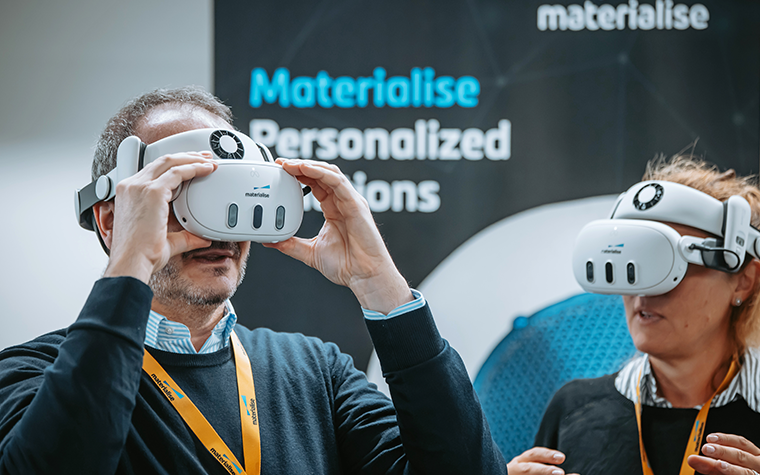
Vladimir Machon, MD, a TMJ surgeon at Charles University in Prague, expects AI to shape this evolution: "Everything is changing with AI and virtual planning." Maarten adds, "AI has strong potential in surgical planning. It can make preoperative planning more efficient and help drive wider adoption of personalized solutions." New tools such as extended reality (XR) are also moving closer to clinical practice, supporting new ways to plan, communicate, and prepare.
With continued surgeon feedback, advances in AI, new materials, and ongoing innovation, Materialise's CMF journey continues to evolve, building on decades of digital planning and plan transfer. However, more than 35 years on, the focus remains the same: helping surgical teams achieve greater predictability from planning through surgery.
With continued surgeon feedback, advances in AI, new materials, and ongoing innovation, Materialise's CMF journey continues to evolve, building on decades of digital planning and plan transfer. However, more than 35 years on, the focus remains the same: helping surgical teams achieve greater predictability from planning through surgery.
L-105302-01
Share on:


You might also like
Never miss a story like this. Get curated content delivered straight to your inbox.