
PODCAST
Medical 3D Players: The Efficiency Breakthrough in Knee Replacements (S2, Ep.04)
Discussing mass personalization in healthcare — because one size fits no one
- Subscribe:
- Apple Podcasts
- |
- YouTube
- |
- Spotify


Uncover the latest medical advancements and challenges in 3D technology. Hosted by Pieter Slagmolen and Sebastian De Boodt from Materialise, this podcast examines key developments with experts in the healthcare industry.
In this episode, Dr. Raju Ghate, an orthopaedic surgeon at Endeavor Health Medical Group in Illinois, USA, shares his extensive experience using patient-specific knee guides in high-volume total knee replacement surgery. He discusses how the technology has more than doubled his efficiency, going from three knee replacements per day to seven. Despite the clear benefits, adoption of patient-specific guides remains surprisingly limited — a trend Dr. Ghate explores in depth. From the OR setup to patient mobilization, you'll hear how personalized technology is reshaping orthopaedic care.
- Subscribe:
- Apple Podcasts
- |
- YouTube
- |
- Spotify
Read the full transcript
Pieter Slagmolen 00:00
Welcome to the 3D Players podcast, where we explore personalization in healthcare to advancements in 3D technology. We talk to leaders championing more predictable and sustainable patient care. I’m Pieter Slagmolen, and I’m joined by my co-host Sebastian De Boodt.
Sebastian De Boodt 00:24
Today, we're diving into the world of high-volume, total knee replacement. We'll be exploring how a widely accessible technology, patient-specific knee guides, is enabling surgeons to deliver personalized care in a way that is both time- and cost-efficient.
Pieter Slagmolen 00:40
And to guide us through this topic, we're thrilled to welcome a true expert in the field. Our guest today is Dr. Raju Ghate, a high-volume orthopaedic surgeon within the Endeavor Health Medical Group in Illinois, USA. Dr. Ghate has been using knee guides since 2010 and has a wealth of experience on how this technology impacts clinical practice.
Sebastian De Boodt 01:01
Welcome to the show, Dr. Ghate. We're delighted to have you here.
Dr. Ghate 01:04
Thank you, guys.
Pieter Slagmolen 01:06
We're absolutely delighted to have you here. So let's dive right in. To set the scene for our listeners, could you tell us a little bit about the patients that you typically treat and what brings them to your clinic? Why are they there?
Dr. Ghate 01:18
Yeah, so I'm an orthopaedic surgeon here in the United States. I specialize in what we call adult reconstruction, which is essentially hip and knee replacement, although I stopped doing hip replacements 12 years ago. You know, the typical patient I see is at what we would call end-stage osteoarthritis. So they have had pain in their knee for several years, likely. They have developed arthritis, which, for laypeople, is the loss of the cartilage, or the nice coating inside your knee that lets us walk around and move around without pain.
They have lost that. They have as much cartilage, as I say, as I have on my head, although this is a podcast and I'm bald. You can imagine that if you are at home or driving around somewhere. So they have basically lost the cartilage in their knee, and they struggle to walk through their daily lives and participate as an active participant in our world. The current treatment, after trying conservative care, usually ends with a knee replacement. That is where I come in.
Sebastian De Boodt 02:16
All right. And following on from that, how do you prepare for such a surgery? Could you take us through what the day of the procedure looks like, both from your perspective and for a patient?
Dr. Ghate 02:28
The typical surgical procedure takes about 45 minutes to an hour to do today. It's done with a spinal anesthetic, typically with sedation. The patients are prepped for surgery, they come into the operating room, and the surgical procedure takes, like I said, about 45 minutes to an hour.
These people are often up walking about two hours after their procedure, and about 70 percent of them now are getting out of the hospital the same day, which is a big shift in what we are doing.
Obviously, technology plays a huge role in what we are doing, not just in terms of anesthetics and how we're approaching people, but the actual technology to get our implants into that patient in a customized way has really helped us. The efficiencies that have been born out of that process have further helped us turn what used to be a 2-hour or 90-minute procedure into something much shorter.
When I first started trying to get these done in under an hour, 20 years ago, now we are getting the actual implants into the patient within about 30 minutes. Then obviously there is closure and getting dressings on. But technology really has been the differentiator in terms of our ability to get people through the process, probably twice as fast as we were able to do 20 years ago.
Pieter Slagmolen 03:50
We'll dive into that a bit more later. When we talk technology, I assume that you mean patient-specific knee guides, and you have been doing that for over a decade. Can you take us back to the early days first? How did you get exposed to the technology?
Dr. Ghate 04:04
I started at Northwestern University after practicing in a private practice group down there in 2005, so 20 years ago, crazy to think. I was doing a standard knee replacement and constantly trying to find ways to make us more efficient in the operating room.
Now, understand, a university hospital historically, just by putting “university” in front of “hospital,” means we are inefficient, right? They are not high-volume, efficient places in general. So really, when I came back there after spending a year at Rush, which was very much a university-type hospital but had figured out the efficiency part of it to some extent, I tried to bring some of that “Hey, let's move this along” mindset in terms of getting surgeries done.
We used to have this mantra where we were going to try to do three knee replacements, or three joint replacements, by 3 pm, which today I can probably do seven by 3 pm, in two rooms. But still, the concept back then was, “Let's do three by three.” Then, eventually, we said, “Hey, let's do four by three,” because we were shrinking down the number of surgical trays that we were using as we were going through that process of becoming more efficient.
One of the surgical techs at that time, a woman named Michelle, went to the, I believe it was the 2010 AAOS meeting, or Academy of Orthopaedic Surgeons meeting, which was in Las Vegas. I did not attend — I think we had just had another child, so I was not going to Vegas that year. She came back, and she said, “I found the perfect thing for you.” She said, “I went to the Zimmer booth, before the merger, and I saw this technology, and you must use it because it is going to change your life.”
And I said, “Okay.” She knew me well, and she knew what we were trying to do in the operating room, and she was committed to that. So I think in 2010 I did my first PSI case, ironically, on the X-ray tech who worked in the operating room at Northwestern. He was really excited about the concept, so it was nice because he had some insight into what we were going to be doing and how we were going to be acquiring these guides and the process. His name was Victor, and he had been at Northwestern for probably 30 years working in the operating room. All those times running around the operating room eventually wore his knee out.
Victor was our first patient in 2010, and it went incredibly well. It was one of those technologies where you put the guides on, and you almost didn’t believe it actually worked. You think, “Okay, this can't be real, this isn't possible.” I remember double-checking because I didn’t believe it — I put an IM rod up the canal, dialed it to five degrees, and checked my pinholes relative to those pinholes, and it was spot on. The learning curve was pretty quick. It took about five or ten cases, and I was in. Then it really took off for me, but I don’t know that it took off the way it potentially could have at that moment.
Sebastian De Boodt 07:24
And for the listeners, maybe not too familiar with the procedure or the technology, can you briefly describe what the problem is that a knee guide actually solves for you as a surgeon and how it works?
Dr. Ghate 07:35
Traditional knee replacement involves a series of estimations based off of anatomical norms that have been established over time. It involves instrumenting the femur, which is basically putting a guide up the hollow part of the femoral canal, or into your femur. We know there is a certain angle that will align your leg correctly.
The goal of a knee replacement used to be, back in 2005, to put something in perfectly perpendicular to the floor, like a good carpenter. There were certain angles you had to resect bone at to make sure you were perpendicular to the floor when your procedure was completed. We would use anatomical landmarks based off of the medullary canal of the femur to set one axis, then use other landmarks and beliefs about the shape of the femur and how the components should go on there. So there was a lot of estimation work going on — scientifically based estimation, but still estimation.
The same was true with the tibia. When you cut the tibia, you were estimating where you thought you needed to be rather than being exact. What the guides did, basically using an MRI, was to say, “Here are the exact points.” There was no more guesswork. It took the guesswork out of the procedure and gave you a 3D-printed guide that went on the end of the femur and was unique to each patient, with drill holes to set our cutting jigs for the procedure.
Pieter Slagmolen 09:20
So you mentioned an MRI, 3D printing, and drill holes based on the patient. What does the process for achieving that look like? It must have changed how you approached the preparation of your patients before 2010 and after you started using the technology. What’s the workflow like from your perspective?
Dr. Ghate 09:40
The workflow before PSI was that you look at the X-rays in your office, note the degree of angulation in the knee, decide what cuts to make, maybe draw some markings on an X-ray with a wax pencil, and go in with a plan you try to execute.
In the modern world, we get the MRI, open the software package that comes with the procedure from Materialise or from the company, and we can plan our surgery much like we used to plan it with wax pencils and an X-ray, but we actually plan it and basically hit send and/or print. However you want to look at it. Guides are printed, and they show up in my hands at the time of surgery. Obviously, they get to the hospital sooner than those that are sterilized and processed.
That whole process is now done two, three, or four weeks in advance. The guides are prepped and sent and used in surgery, versus relying on that estimation work. It completely changed the workflow in the operating room. How we approach the workflow has changed dramatically over the course of the past 15 years.
Sebastian De Boodt 10:55
You mentioned how, over the past 20 years, you went from “three by three” to “four by three,” and maybe to seven surgeries now. Efficiency has been an important focus. Can you explain what role the PSI guides play in giving you more efficiency? What bottlenecks did you have before? How much time did it take?
Dr. Ghate 11:17
It’s probably a several-fold answer. And, I could probably break them up into categories. The first being just the setup of the room. So you walk into the room now. And, I was actually joking about this with our OR manager the other day, that back when I was a resident going through training the joints, arthroplasty, or adult reconstruction rooms, you walked in there, and there are 15 trays open to do one procedure. 15 surgical pans open to do one procedure, maybe 12 to 15, whatever it might be. And my sports colleagues who are doing ACL reconstructions and rotator cuff repairs had five or six trays open. They had, we would call fast turnover. And, all the nurses liked being in there because it wasn't that much work, because you could open five or six trays and do a surgery. And meanwhile, if you're in the joint room, you're opening 12, 13, 14 trays.
So with this technology, because we know what we're going to need before we ever get to the operating room, we now open, I believe, two company trays, and then we open two hospital trays that would involve basically a saw, knife, retractor, stuff like that. So it's completely changed. Now, the fast turnover rooms are the joint replacement rooms for the most part, or at least my room, because we're only opening a third of what we used to open 10 – 15 years ago. So that's one phase. So that turnover time has gone way down for our procedure, and we've also further enhanced that. In order to get that down, we only open the cutting guide and the femoral size that we're actually going to use. So instead of having a tray with 10 femurs and 10 cutting guides, we now say Sally is going to be a size eight femur. So we open a cutting block and a trial component, and we don't open anything else unless we need to adjust by two millimeters here or there. That saved us time and money. I wish we could quantify how much money, but it's really hard to quantify that. We now have a cart that has individually wrapped cutting blocks and trial components, rather than giant trays that are open for each case. So that's one component of it. So that's the sort of surgical OR component from a hospital standpoint.
And then there's a surgeon component, right? There's the actual surgical procedure, which, if you think about a surgical procedure as a bunch of hand movements while you're in surgery, the surgeon moving their hand and people holding retractors, the number of hand movements required and instruments required to be passed in and out of the surgical field. I couldn't even tell you what the reduction is, but it is tremendous. So the number of instruments I use has gone dramatically down, which means I just don't have to move my body and hands as much and not as much has to be passed. So the actual surgical procedure time has dropped, probably by 20 minutes over the course of starting this.
Now, understand, I was five years into practice, and I was actually doing okay. My, what we call tourniquet time. So that's a time that the tourniquet is up while we're working. Before I started doing this, I was probably around 45 – 50 minutes on tourniquet. And now we're probably anywhere from 24 – 32 minutes on average on tourniquet. Over the course of a day, that’s a dramatic reduction in time. Now, the seven cases, not to confuse anyone at home, we now use two rooms, so I bounce back and forth. So that's the advantage. But, for example, in that first room, I'm getting four cases done by probably two o'clock now.
Pieter Slagmolen 15:08
Obviously, that's a huge operational gain. Does it, in the end, impact the patient as well? Does the patient benefit from these reduced timeframes?
Dr. Ghate 15:16
Well, of course, yes. That’s another several-fold answer, not to bore people at home, but yes, because we're able to use a short-acting spinal anesthetic. And so a long-acting spinal would last three hours. Your alternative is something that lasts an hour and a half or an hour and 15 minutes. And so we're now able to use that shorter-acting spinal anesthetic combined with a local anesthetic, and these people are up walking an hour and a half after surgery. Because of the time involved before, they wouldn't get up until potentially two to three hours after surgery, until their spinal anesthetic wore off. So it certainly is impacting the mobilization of the patient. And then the other aspect is we're able to customize what we're putting into that patient's body now based on their anatomy. We know what we're doing before we get there, which is a tremendous advantage. And we're no longer estimating, we're 'exactimating.' So we know what we're putting in before we get there.
Sebastian De Boodt 16:18
So the confidence for you is also an important factor that is going up.
Dr. Ghate 16:22
Yeah, and we can talk a little bit about the evolution of what we're doing, but in terms of planning, but that may be something further down the road.
Sebastian De Boodt 16:36
It's fascinating to hear about those benefits, both from an economic standpoint as well as for the patient. Yet, we also understand that market penetration globally, so not within your practice but if we think about all knees being replaced, for PSI is probably around 15 percent. You're obviously super convinced about the technology. It has proven to be super valuable for your practice. Why do you think this technology, which has proven to be so valuable, is not more widely adopted already?
Dr. Ghate 17:06
This has been probably the great mystery of my career. I think it has to do with number one, people have inertia. They don't want to change. There's a resistance to change. I think you're going to see less and less of that as younger surgeons come out, because as technology has been rolled out, they are more and more comfortable with adapting to newer technologies. Surgeons of my generation, depending on where you trained, would impact your willingness to use technology.
I'll give you a great example. I trained at Northwestern, and there were two gentlemen, a guy named Dave Stulberg, who you probably know, may have heard the name, and another gentleman named Rick Wixson, and they were really pioneers in computer-assisted surgery. So they were using sensors and trackers and everything that sort of has been the next generation of PSI and robotics, in theory. Version 2.0 is where we are, or maybe even onto version 3.0 actually, now, in the past couple of years, but version 1.0 was those guys, and I was a resident watching them do that. And I will tell you, I had no idea what the hell they were doing in the operating room, but I was certainly exposed to the idea that there's this computer in this operating room with us that is somehow helping, in theory, this surgeon put this knee in better, right? And so that concept of technology is your friend was sort of imprinted in me when I was a resident.
Now, go across town to Rush, which is a very prominent, well-regarded joint replacement institution in the United States. And they openly mocked technology. They were like, "This is so stupid, you don't need a computer to put this in." They were sort of in the "just do it the old-fashioned way" mindset. That sort of mentality was pervasive throughout probably the first decade of this century, in terms of our culture within the arthroplasty world, within the joint replacement world. And there was a lot of inertia to never accept technology and the need or use for technology. And I would say that generation, which is really my generation, to some extent, I would say probably now 50 – 60% of us use some technology, but 40 – 50% are still using old, traditional knee replacement surgery as their go to which is sort of crazy to me, but, I guess to them, they don't want to change.
The next thing that has been interesting on this technology front is we have a fellowship here. So we have four fellows that are at Endeavor Health with us here in Skokie, Illinois. We have every robot under the sun here, and every technology under the sun here. We have PSI, we have Rosa robots, we have a CORI, we have several Mako robots. And so almost every procedure done at our institution by the people in my practice has some technology going into that joint replacement. And so for years, and we were a fledgling program when it came to fellowships, but what really drew people to us was like, "Oh my god, they have every technology there." And so we're very technology-forward, and the people we are now training are basically going out there with a technology background. And so I think there was just so much inertia to not change around when this technology came out. It's almost like it needs to be relaunched with a new generation and a new look at these younger surgeons who have now appreciation for technology that I had, but I was unique in that sense.
Pieter Slagmolen 21:14
Let this podcast then be a milestone in going through that journey and teaching the younger generation.
Pieter Slagmolen 21:26
You already mentioned robotics and the ability to use multiple types of technology in treating patients. How do you decide which technology is right for one specific patient or situation? How do you choose which technology to use where?
Dr. Ghate 21:40
This is a little bit of my inertia, but also a little bit of my desire to be efficient. I use a patient-specific guide on every patient I can get that done on. That’s anyone who doesn't have hardware that's close to the knee, or anyone who doesn't have a pacemaker, or is severely claustrophobic that would prevent the MRI acquisition. I would say I'm probably about 80% using 3D-printed guides. And I am 20% using robotics at this point because of the reasons that I mentioned before. So that's where I am in my practice. The reason I'm there is that it's still more efficient to use the PSI guides. And now that we've gone to version 3.0, as I was alluding to, which is the modified kinematic approach, where we can essentially do exactly what they're doing with the robot in terms of predicting where to put a knee based on the patient's anatomy and their scan. Now that we're making those changes and able to do that with the PSI guides, there's not a ton of advantage, I think, to robotics versus PSI. It's an extra 10 minutes from an acquisition standpoint in the operating room, with the robotics, that I don't want to spend doing.
Sebastian De Boodt 23:07
Makes sense. We're also seeing a shift in healthcare towards outpatient treatment centers, and these often smaller facilities have different economic and spatial constraints. Do you see certain advantages or disadvantages of using guides versus robotics?
Dr. Ghate 23:23
Why are we at 15% adoption? It's shocking that we're at 15%. Because, as I was alluding to, the number of trays we now open is less than my partners open to do a sports case or an ACL or rotator cuff because of this efficient care model that we've developed. Some companies were championing this early in the 2015 era, but went away from it as they really turned their focus to the robotic stuff. But there is no better technology for a surgery center from an efficiency standpoint than the PSI guides, in my opinion. From the setup of the procedure to the space you need to do it, you can certainly do these procedures in a smaller environment. To bring the robot into a room, they're not tiny, little microphones attached to your table. They're a large device with a significant structural space that requires a larger environment to operate in, that some of these surgery centers don't have. Again, this falls into the great mystery of marketing and how this sort of technology, in some respects, has slipped through the cracks at this point.
Pieter Slagmolen 24:37
You mentioned a lot of the benefits in the OR and also talked about the benefits for the patients. The predictability that guides allow might actually also enable medical device companies to change how they operate, how they manage their stock, and how they organize their supply chain. With the experience that you have and the amount of knee guide technology that you use, are you seeing this happening? Have you noticed changes in how they manage their logistics?
Dr. Ghate 25:04
I know here locally, they manage their logistics differently at our hospital, due to the PSI guides. I have always thought that was sort of the big win for the company. If you know three weeks in advance that Mrs. Jones needs a size seven femur at Skokie Hospital at two o'clock in the afternoon, you can really start changing how you move your implants around in your inventory. Because, obviously, the more specific you can get on your inventory, the less inventory you need to have. I just don't know that the companies have really gotten that granular with their knowledge base.
Frankly, with robotics, they can get closer, but often with robotics, they don't know exactly the size potentially, or that correlation between scan and size may not be perfect until you get to the operating room. But, I do think, yes, of course, these are the things that you try. I always tell people when we talk about this technology, it helps the surgeon, it helps the patient, it helps the company. Probably the only one that it doesn't help is the insurance company. But you know, that's their problem.
Pieter Slagmolen 26:11
Well, if it helps the patient, then you would assume, in the long term, it also helps the insurance company.
Dr. Ghate 26:15
You would assume that. It's one surgery and done, rather than the potential for extra revision procedures.
Sebastian De Boodt 26:21
Looking into the future of this kind of procedure, a critical part of a successful knee replacement is also managing the soft tissue around the joint, and so much of the current planning is based on the patient's bony anatomy. How do you take soft tissue into account today, and what role do you see it playing in the future of surgical planning?
Dr. Ghate 26:44
I've moved to a modified kinematic approach. And so what that means is we're taking into account, into our plan, the patient's preoperative alignment, and likely natural alignment prior to disease. So, if someone was bow-legged their entire life, and as the disease progressed, they went from three degrees of being bow-legged to 13 degrees. In 2010, I was putting that person at zero degrees in terms of being perfectly straight. Now, my goal is to put them back to three to four degrees. The ability to dial that in with the guides has reduced the amount of soft tissue work that I need to do, probably by about 90%. As I was mentioning with our fellows, I used to do a medial release and show them how I did that. And I would do that three or four times a day. And they would learn to do it. Now, it's almost like, "Hey, I got a medial release I need to do. You should watch how I do this." Because it's like, once a week, or once every other week. So some of those reasons to do certain things in terms of releases have gone away because of our ability to be more comfortable with a modified kinematic approach. And I would tell you that patients are happier with a modified kinematic approach because they feel like they're getting back to their normal, sort of "this is what I looked like when I was 35," and not "this is my new reality, which looks and feels really weird." I always joke, when we were done back in the 2000s, you couldn't wear corduroys because we put you so straight that your corduroy pants would make noise as you walk down the hallway. We've moved away from that. Now people can wear corduroys again.
Pieter Slagmolen 28:27
So is that what makes patients happy?
Dr. Ghate 28:30
Yeah, the ability to wear corduroys. As I alluded to, I think putting them back to where they felt like they were naturally in their 20s and 30s is a better place to be. And I think that the technology, the implants, have allowed us to go there in terms of durability. And now the technology of PSI and 3D-printed guides has allowed us to put them there.
Pieter Slagmolen 28:57
With the evolution that you described for patients, obviously, our shared goal would be to find a way to bring this technology into the hands of more surgeons, going way beyond the 15% and then ultimately benefit more patients. What do you think needs to happen to realize this, and is there another evolution for guides needed to really make this shift move forward?
Dr. Ghate 29:18
I've racked my brain on this one, to be honest. There are a couple of challenges, I think, that fellows face when they leave our program. Most of them who leave our program think "I’m going to use PSI when I get out, this is easy. This is a no-brainer. l love this technology." And then they get to their hospital system, and the hospital system says, "We're not paying for this technology. What's this MRI? How do you get this MRI, or an insurance loophole that won't let you get the MRI?" We have that all figured out here. We don't get any rejections on our MRIs. We, institutionally, know that if you take the cost of the guide minus the plus side of the MRI, you're probably coming out net neutral. And the problem is, hospitals don't think like that. They have the Department of Radiology, and they have the Department of Surgery, and the Department of Surgery is down $100 for this guide, and the Department of Radiology is like, "I'm up because this idiot's using these guides and pumping MRIs through us. We love this."
It took me basically getting those two people in the room, saying, "Hey, you're making money. You might be losing money, but we are all doing fine." So getting institutions to look at this as “we” can be beneficial. The problem is, with surgery centers, they don't have MRI machines often, and those MRIs are being done, potentially at the surgeon's office. Or the surgeon's office says "These MRIs are great," while the surgery center says, "Why are you making me pay for this?" Now, this goes back to something you alluded to, which is quantifying the savings of the technology. I think we need to find a way to quantify what this technology does from a financial standpoint. So what does it save us to not open two or three more trays worth of trial implants? What does it save us to save 10 to 15 minutes in the operating room, not just on the actual surgical procedure, but on the setup? What does this look like from a savings standpoint to justify the cost of those guides? And so the issue there is that institutions are very ambiguous about what those savings look like. As I have gotten involved with administration here at Endeavor, frankly, I can't even figure out how to account for it. Yes, we're saving money, but I have no idea how to tell you what we're saving, because we actually can't get that granular to tell you what that number is.
Pieter Slagmolen 32:18
So it needs a holistic perspective, and at the same time, better data to try and quantify the value.
Dr. Ghate 32:25
Right. And I think that the companies who use the technology need to commit to making this part of their pitch, or their menu of options of how to do their knee replacements. Because of the success of the Mako, it caused a lot of panic amongst other companies to really throw a lot of investment and noise at robotics, because every patient felt they needed a robotic knee. They heard robots, and they thought, "It must be better." Robots have to be better than humans. It's sort of this mantra that gets out there. I think that now that we've survived that, the technology continues to be used despite the prevalence of robotics. I think it's worth another look at where this fits into the portfolio of what companies offer and where this should ideally be used. And the companies say, "We can't get a robot into this surgery center, but let's talk about how we can get PSI guides into this surgery center." And I think as this next generation of surgeons gets into their careers, there certainly will be more of an appetite to use technology than there has been with my generation, and clearly the generation before me.
Sebastian De Boodt 33:56
We now talked heavily about one specific application for a personalized device in orthopaedics. Do you see other applications where personalization makes sense? It can be a guide, but also a personalized implant. Where else do you see the value of personalization in orthopaedics?
Dr. Ghate 34:13
Well, obviously, in other procedures. I think you're doing it in shoulders. It's being done in ankles, to some total ankles. I don't know that there's a hip application at this point. But in terms of personalized implants, I think that gets a little dicey. I don't know that there's a role for that. You were asking earlier, though, in terms of personalizing, I do think there's potentially a role with the improvement in 3D printing of printing these guides on site to speed that process along. And I don't know what that looks like. But I certainly think in high-volume places, that's potentially an attractive option.
How do you print these things? I'm doing 500 - 600 of these per year. Is it worth printing those locally? And what does that look like, and how do we take some of the shipping concerns, or some of the transport concerns, out of what we're doing because we have a printer on site or a printer locally somewhere that's pumping these out. I think that's potentially how you partner with institutions and make it intriguing for institutions. We're going to print this stuff at your hospital. We're going to bring this right to your front door, and you're going to be able to market this as this is being printed here, and this is how technology-forward our hospital is. I think we went down this rabbit hole a couple of years ago talking about that, and I think it's worth going back to that to see if there’s a way to get this technology closer to us. Because you guys are in Belgium, and I'm here. Your engineers are all over the place processing these things. So the ability to say, this just needs to get printed at Skokie Hospital, and my sales rep, Jordan, just goes down there and picks it up and puts it through the sterilization process with our central supply. That's a pretty cool concept to start thinking about. Have you guys thought about it?
Pieter Slagmolen 36:19
There are many areas in which hospitals are printing in-house at this point in time. For this application, if the main motivation would be to reduce potential barriers of bringing them to you faster, maybe there are other ways of achieving that which are more efficient than trying to print them in-house. For other applications, it seems very favorable to still do 3D printing in-house. It’s really on an application-by-application basis that we need to look at this. That's my perspective, at least.
Dr. Ghate 36:51
From a hospital standpoint, that's a pretty cool thing to market. That you can print this thing. You put that printer in the lobby; it’s a showpiece. This is an orthopaedic hospital, and we're doing this. We're so good here that we're doing this stuff here. The lab becomes part of the overall marketing feel of the place.
Pieter Slagmolen 37:12
There is a marketing value, and a lot of hospitals see that. There are obviously some complexities in terms of doing this operationally, safely, qualitatively, and reliably within compliance, which is a huge challenge in many ways. So, I think it's about finding that balance between the value it offers to be able to say you do it in-house and the operational gains, versus the hassle that comes with it. It’s a discussion that we regularly have around all products that we make. What's the best place to make these things? Is it best to make it in-house, within our factories, or is it best to enable others to build them in-house? It's a continuous discussion, and 3D printing is wonderfully placed to allow both scenarios.
We're closing in on the end of our discussion. It was, at least for me, incredibly insightful. What I take away, among other things, is the huge operational gains that you describe by using this technology, and the time savings in the operating room, going from two hours to 45 minutes over that extensive history that you described, which is very impactful. Sebastian, what did you take away?
Sebastian De Boodt 38:21
Oh, I definitely agree, Peter. I think the fact that the surgical guides still provide you with more efficiency than what you have with the robot, I think was also interesting to hear. And then just the mystery of why we're not able to drive adoption more, and where there's a key in trying to find a way to quantify the value, knowing that this is not so easy with how institutions are set up. But I think if we could think about ways to do that, and as an industry, maybe play a stronger role in making it easier for the hospital to understand the total value it brings, we would probably be a step in a good direction.
Pieter Slagmolen 38:58
Thank you so much, Dr. Ghate, for joining us today. It was a wonderful conversation, and it was a pleasure to have you share your extensive experience and expertise, so I truly enjoyed it.
Dr. Ghate 39:08
Thank you, guys.
Sebastian De Boodt 39:10
This was 3D Players, the podcast where we delve into the latest trends and innovations in personalized and sustainable healthcare.
We were your hosts, Pieter Slagmolen and Sebastian De Boodt. If you enjoyed this episode, be sure to check out our series.
Featuring
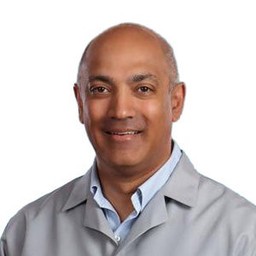
Raju Ghate, MD
Orthopaedic Surgeon, Endeavor Health
About your hosts
Pieter Slagmolen
Innovation Manager, Materialise

Sebastian De Boodt
Market Director, Materialise
Share on:


L-104950-01