
CASE STUDY
FEops' Predictive Simulations Support Optimal TAVR Planning in a Young Patient with a Small Anatomy
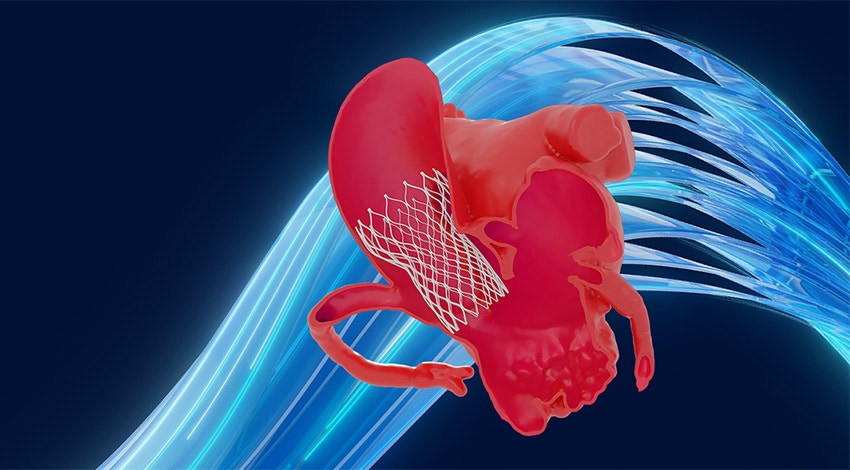
In younger patients requiring transcatheter aortic valve replacement (TAVR), careful planning of the initial procedure takes on heightened importance. Decisions made at this stage — including device size and implantation depth — can influence life‑long outcomes, from future coronary access to the feasibility of redo‑TAVR. It’s essential that clinicians like Dr. Joanna Wykrzykowska select the optimal strategy for sustained cardiovascular health.
The challenge
- Planning an intricate procedure for a young patient with a small aortic root anatomy
- Identify a valve size and implantation depth that would provide an optimal long-term outcome
The approach
- Compare two Medtronic Evolut FX sizes (26 mm and 29 mm) at two possible implantation depths (±2 mm and 5 mm) using FEops' predictive simulations
- Implant an Evolut FX 26 mm at a depth of 5 mm
The outcome
- Excellent coronary access and no complications, confirming the simulation results
The challenge
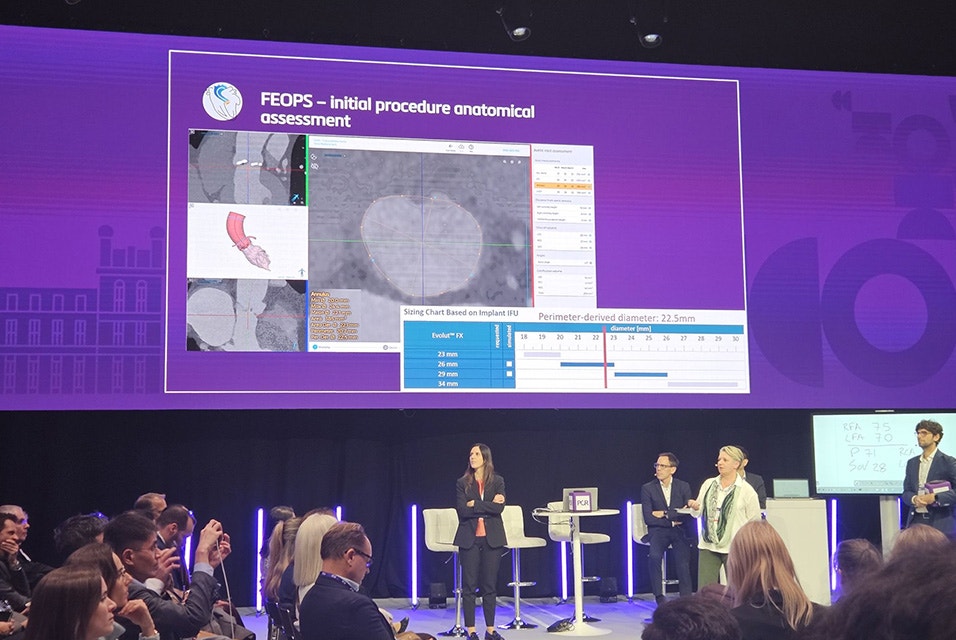
In a Medtronic-sponsored case shared at PCR London Valves 2025, Dr. Joanna Wykrzykowska, an Interventional Cardiologist at the Department of Cardiology in the University Medical Center Groningen, took on a young patient with a small aortic root anatomy.
Her challenge was to identify a valve size and implantation depth that would:
- Preserve coronary access in potential future interventions
- Avoid impact on the conduction system
- Secure effective sealing to minimize or eliminate potential paravalvular leak
Balancing these factors is complex, as design characteristics, anatomical constraints, and long‑term management strategy intersect.

The approach
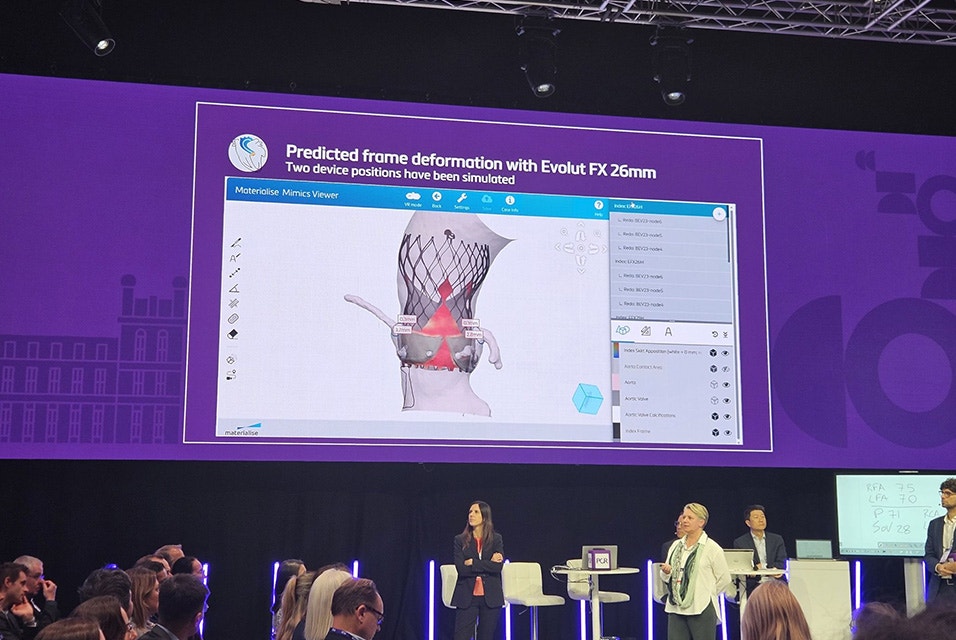
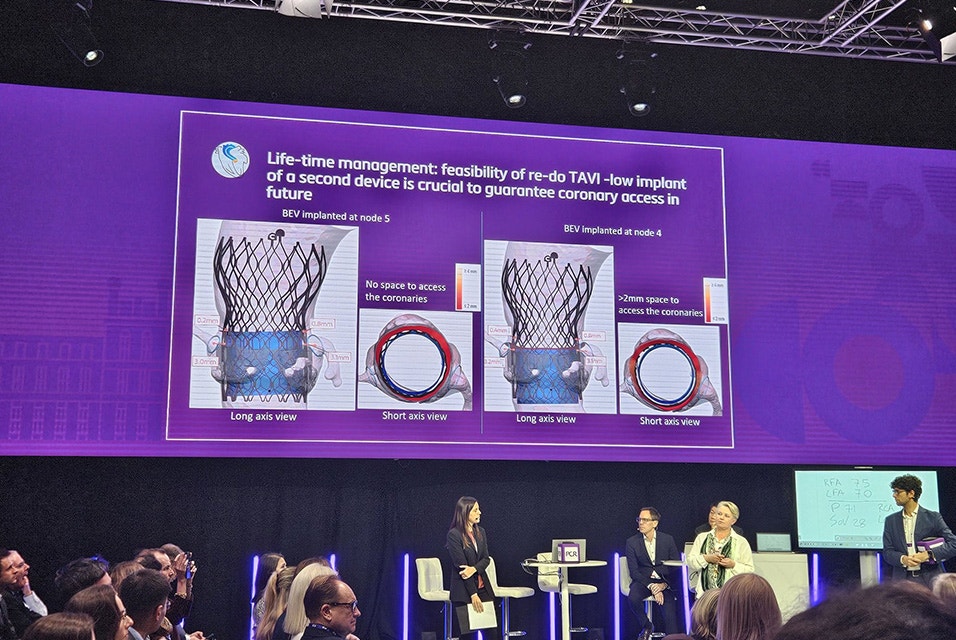
Dr. Wykrzykowska and her team performed an analysis using FEops' predictive simulations to compare two Medtronic Evolut FX sizes (26 mm and 29 mm) at two possible implantation depths (+2 mm and 5 mm).
The simulations provided detailed visual, qualitative, and quantitative insights into device‑anatomy interaction.
The analysis indicated that the Evolut FX 26 mm implanted at a depth of about 5 mm would be the most suitable, offering:
- Maintained coronary access, even in the event of redo‑TAVR
- No low contact, minimizing interference with the conduction system
- Adequate skirt apposition, indicating little to no risk of paravalvular leak
The outcome
During the procedure, Dr. Wykrzykowska implanted the Evolut FX 26 mm, achieving excellent coronary access and no complications, confirming the simulation results.
This case showcases the value of advanced pre‑procedural simulations in young, complex, or borderline anatomical cases. The simulations validated the procedural decisions taken and highlighted how Materialise and FEops can support planning for long‑term patient outcomes.
L-105065-01
3D planning is available in the EU, UK, Switzerland, Canada, Australia, and US. Predictive simulations are not available in the US.
Share on:


