
CASE STUDY
Efficient LAA Closure in Challenging Anterior Anatomy
Left atrial appendage occlusion (LAAO) is increasingly recognized as an important intervention for stroke prevention in selected atrial fibrillation patients. Especially in challenging cases, optimal pre‑procedural planning can significantly impact procedural efficiency, safety, and outcomes.
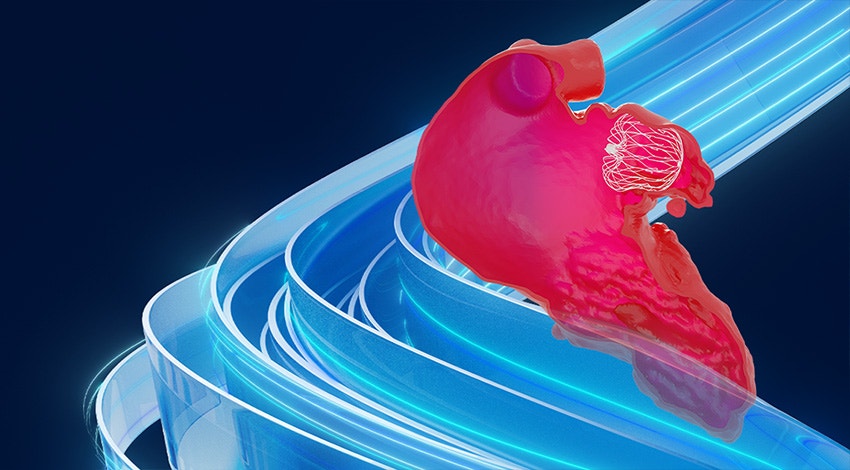
The challenge
- A patient with a small LAA morphology and an anterior orientation
- Potential complicated device positioning and sealing
The approach
- Integrate CT‑based pre‑planning with predictive simulations to evaluate potential device sizes and implantation positions, and transseptal punctures
The outcome
- LAA closure was achieved with one device and a single deployment
The challenge
In a case shared at PCR London Valves 2025, Dr. Carsten Skurk, Department of Cardiology, Angiology and Intensive Care Medicine at Charité Universitätsmedizin Berlin, had a patient with a small LAA morphology and an anterior orientation. This anatomical profile often challenges transseptal puncture alignment, making accurate device placement and reliable sealing more difficult. Achieving the correct puncture site and device orientation within these constraints is essential for a successful closure and for minimizing procedural risks.

The approach
The treatment plan integrated CT‑based pre‑planning with predictive simulations to evaluate potential device sizes and implantation positions before entering the catheterization lab. FEops' predictive simulations identified the optimal device and its precise position within the appendage.
“With predictive simulation, we could select the optimal device size and position, making it a safe and efficient procedure. ”
— Dr. Carsten Skurk
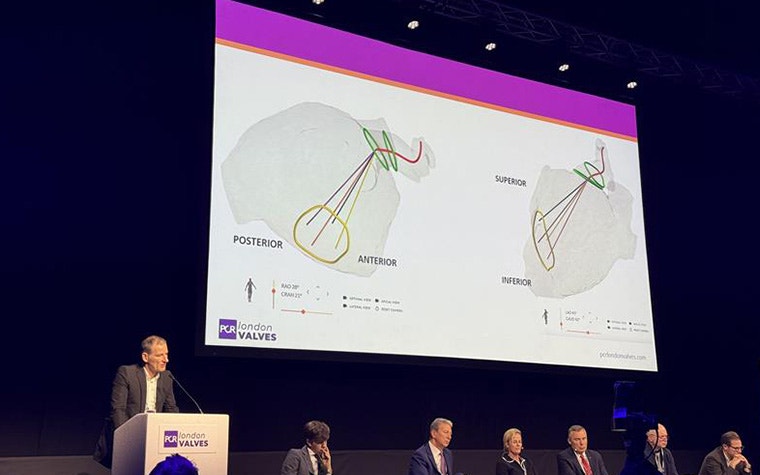
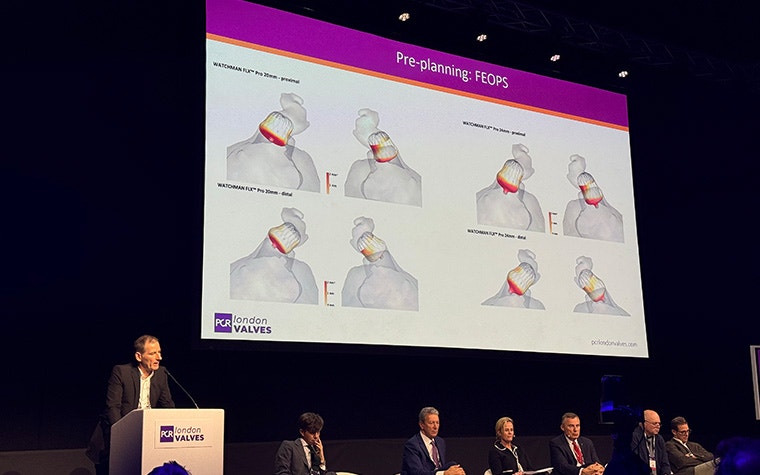
Dr. Skurk presenting at PCR London Valves 2025. Images shared with permission of PCR.
The outcome
Guided by the pre‑planning results, the team performed the LAA closure with intracardiac echocardiography (ICE) catheter guidance. They achieved LAA closure with a single device and a single deployment, without the need for repositioning. The combination of accurate CT‑based planning, predictive simulations, and ICE guidance resulted in a safe and efficient procedure.
This case highlights how combining advanced CT pre‑planning with predictive simulations can streamline workflows, reduce procedural complexity, and secure optimal outcomes, even in challenging LAA morphologies. By enabling precise device selection and positioning before the procedure, the need for trial‑and‑error in the cath lab can be minimized.
L-105007-01
Share on:


