
CUSTOMER STORY
Virtual Surgical Planning in Practice: How USC Integrates 3D Surface Modeling into Complex Care

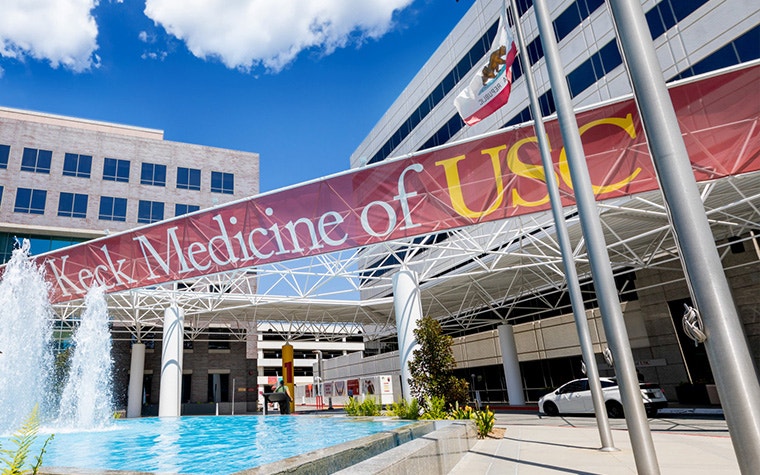
As surgical cases become increasingly complex, hospitals are progressing beyond traditional workflows to deliver truly personalized care. At Keck Medicine of the University of Southern California (USC), virtual surgical planning has become an area of clinical expertise rather than an abstract ideal.
Through the Center for Innovation in Medical Visualization (CIMV), Summer Decker, PhD, and Jonathan Ford, PhD, have successfully interwoven 3D surface modeling and virtual surgical planning directly into care pathways for complex cases. The collaboration between radiology and the surgical specialties is close, with CIMV being tightly integrated with radiology from the beginning.
As opposed to relying solely on conventional 2D imaging or static volume rendering, CIMV converts CT and MRI datasets into patient-specific, interactive 3D surface models in Materialise Mimics. These digital models form the foundation of virtual surgical planning. From there, surgeons can explore anatomy spatially, test approaches, and anticipate challenges before entering the operating room. The result is greater procedural confidence, clearer decision-making, and improved collaboration across disciplines.
“If you want to have longevity in your career, you must embrace disruptive technologies. We in radiology need to be experts in our field, reviewing cases with surgeons on the Mimics software, showing them the segmented anatomy — this is the approach for the future of radiology.”
— Summer Decker, PhD
Turning complex anatomy into actionable insight
Many of USC’s most challenging referrals involve patients with altered or atypical anatomy, often after multiple prior surgeries. In these complex cases, interpreting spatial relationships with only 2D images can be limiting. By segmenting relevant structures and generating distinct 3D anatomical models, CIMV provides surgeons with a clear, manipulable view of the specific anatomy that cannot be fully appreciated through traditional imaging alone.
One orthopaedic case included a complex hip replacement for a woman in her fifties who had several prior surgeries and osteotomies. Orthopaedic Surgeon, Nathanael Heckmann, MD, points out, “When I have the 3D visualization in Mimics — it’s anatomic visualization with unparalleled quality.”
A shared visual language for multidisciplinary teams
Virtual surgical planning at USC is inherently collaborative. Radiologists, surgeons, and engineers gather to study the patient-specific 3D surface model together, rotating and reviewing structures in real time. This shared visual environment replaces abstract descriptions with spatial clarity, enabling faster alignment on surgical strategies and reducing the risk of miscommunication.

Once the virtual plan is finalized, the team can also create physical 3D-printed models to support preoperative rehearsal and intraoperative reference for the most complex cases. However, the primary clinical value lies in the digital planning process itself, where surgical decisions are shaped by interactive models rather than mental reconstruction from flat images.
Enhancing informed consent through visualization
Virtual surgical planning also reshapes how patients engage with their care. For many, medical imaging feels inaccessible and abstract. Interactive 3D virtual models change that experience, allowing patients and families to see and understand the anatomy involved and the planned surgical approach. This clear comprehension empowers them to ask more informed questions and provide true informed consent.
“For pediatric patients especially,” says Dr. Summer Decker, CIMV Co-Director. “Letting parents hold the model, see what approach the surgeons need to take — they breathe a sigh of relief.”
Training the next generation
As an academic medical center, USC extends the impact of virtual surgical planning into education. Residents and fellows use personalized 3D models to develop spatial understanding and planning skills, preparing them for a future where advanced visualization is integral to surgical practice.
Setting the standard for the future
USC’s CIMV demonstrates how embedding 3D surface modeling and virtual surgical planning within clinical workflows elevates care delivery. By transforming imaging data into actionable, interactive insight, USC is setting a standard for precision, collaboration, and confidence in complex surgical care.
L-105254-01
Revision of L-104953-01
Materialise medical devices may not be available in all markets because product availability is subject to the regulatory and/or medical practices in individual markets. Please contact your Materialise representative if you have questions about the availability of Materialise Medical devices in your area.
Share on:


You might also like
Never miss a story like this. Get curated content delivered straight to your inbox.